 Parrot Blog
The Secret of Parrot Color
A simple look at the science hidden inside colorful parrot feathers and how those colors are made.
 Changhwan
Introduction
When you look at parrots, there are moments when you wonder how they can have such vivid colors.
Green, blue, yellow, red. And even within the same species, there are so many color mutations like normal, blue, lutino, pied, and cinnamon.
Parrot feather color is connected to feather structure, pigments, genetics, and breeding strategy.
Today's topic is a little scientific, but I will keep it simple and walk through the basics of how parrot colors are made.
Parrot Color Cannot Be Explained by Just One Thing
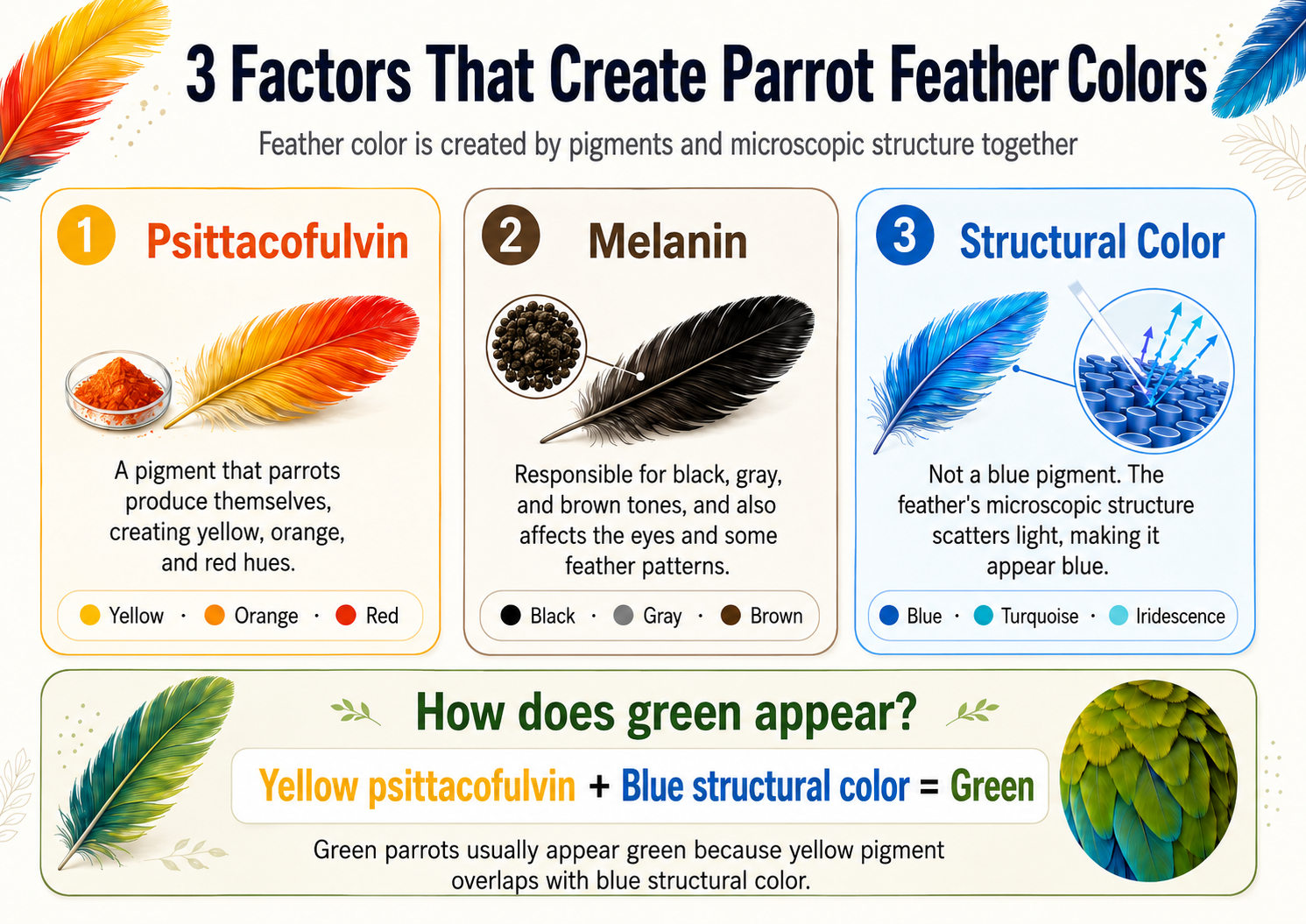
The three main elements of parrot color
When we look at a parrot, we usually describe it simply as "green," "blue," or "yellow." But the actual feather color is made by several elements overlapping with one another.
Parrot feather color is mainly influenced by three things.
- Psittacofulvin
- Melanin
- Structural color
The way these three elements combine is what creates the colors we see in parrots.
Psittacofulvin: Red to Yellow
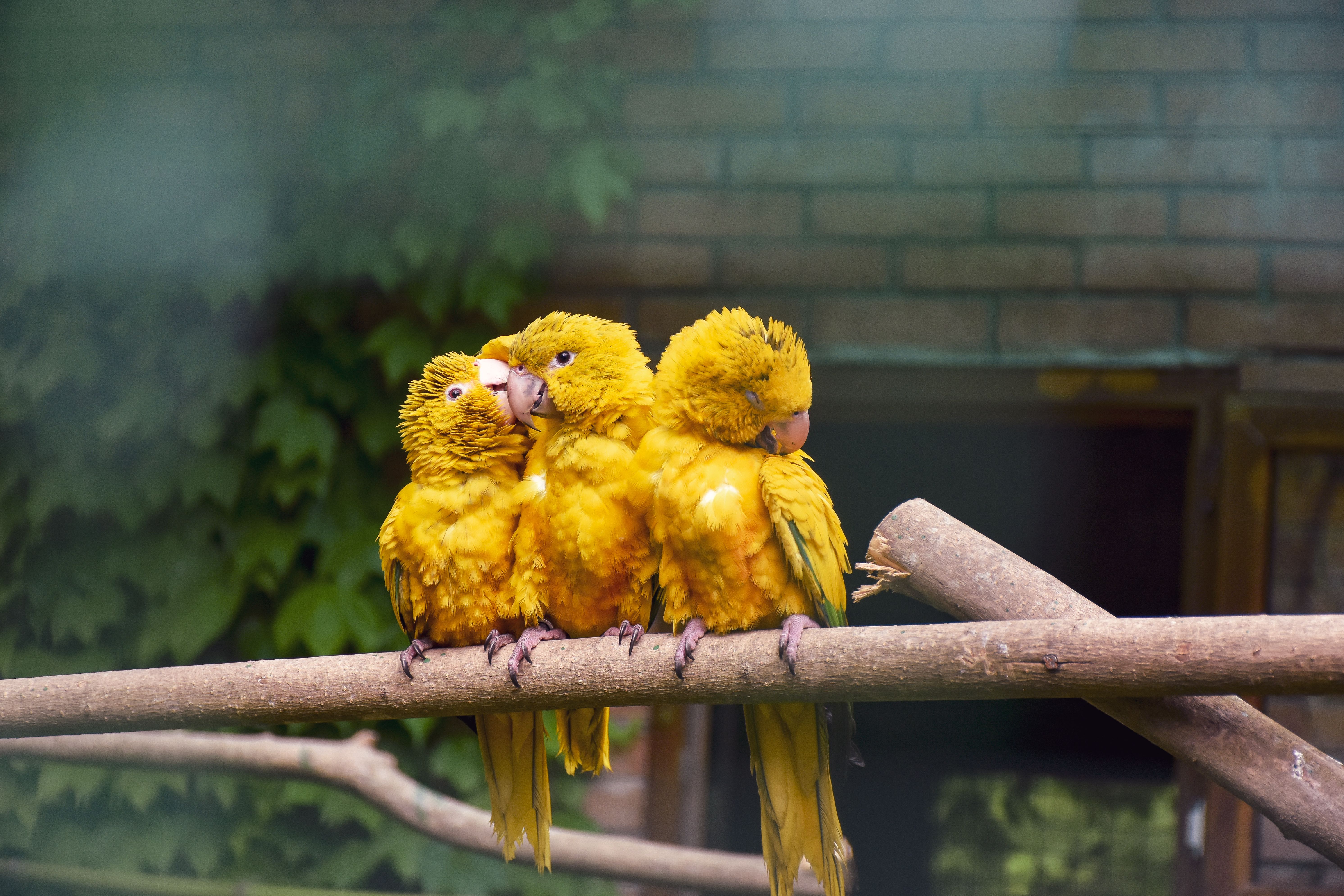
Golden conures. Their yellow tones, and part of their green appearance, are influenced by psittacofulvin.
The yellow, orange, and red colors in parrots are mostly related to a pigment called psittacofulvin.
Most birds use pigments called carotenoids when they create yellow or red colors, and those carotenoids usually come from food. Carrots, for example, are orange because of carotenoids.
But parrots are a little different.
Parrots do not simply take carotenoids from food and use them to make red feather color. Instead, they produce psittacofulvin while the feather is growing and use it to create red-toned colors.
That is why parrot color is not just a color that comes directly from food. It is a color they produce on their own.
Melanin: Black to Brown
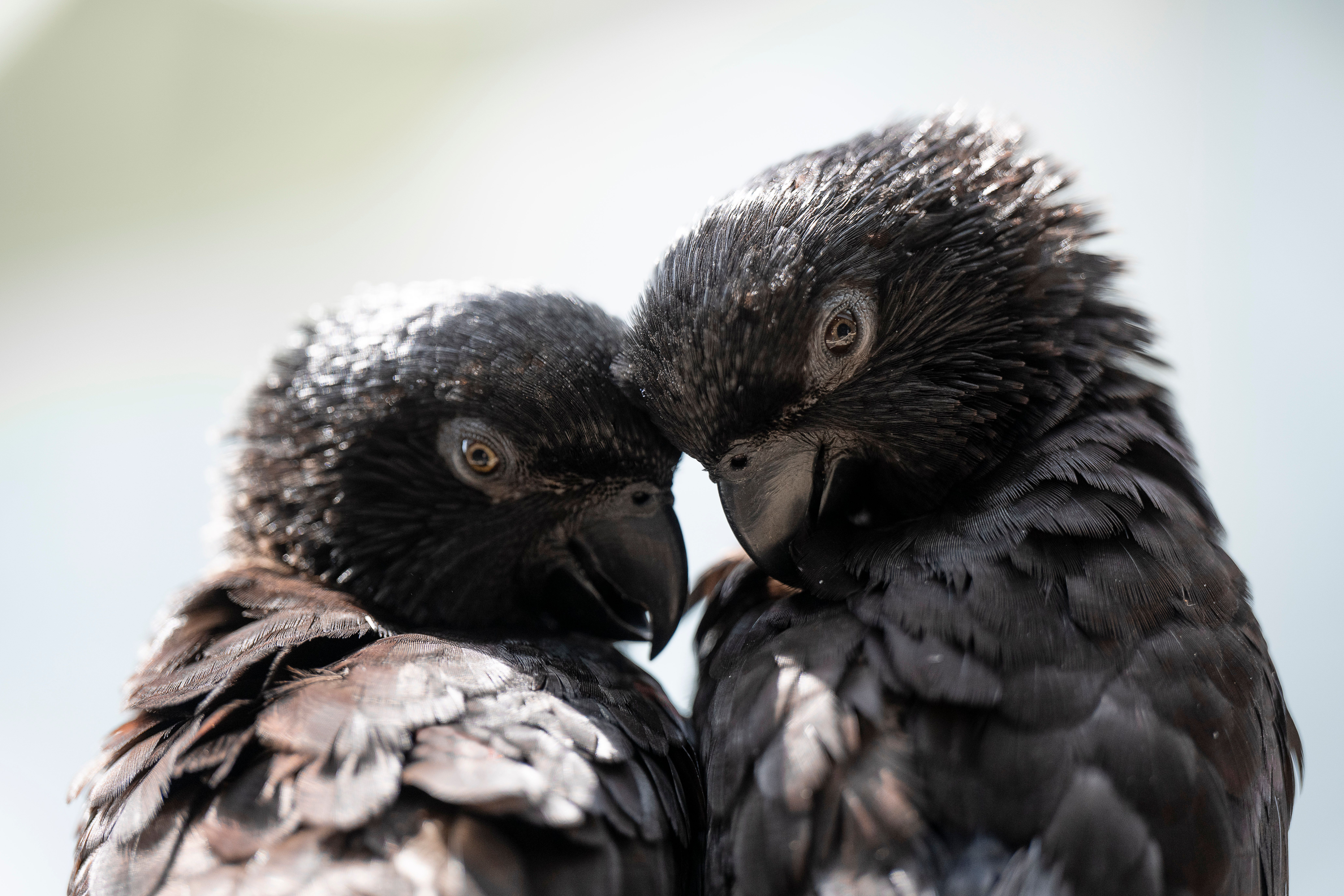
Black lories. Their dark brown to black body color is influenced by melanin.
If psittacofulvin is related to red-toned colors, melanin is related to black and brown tones. It is probably a more familiar pigment to many of us.
Unlike psittacofulvin, melanin is not unique to parrots. It appears broadly across the animal kingdom. Human skin color is famously influenced by melanin too.
In parrots, melanin can be found in gray wings, black heads, brown patterns, and many other features across different species.
Eye color is also affected by melanin. Birds with a lot of melanin tend to have darker eyes.
Structural Color: Blue, Fluorescent Tones, and More
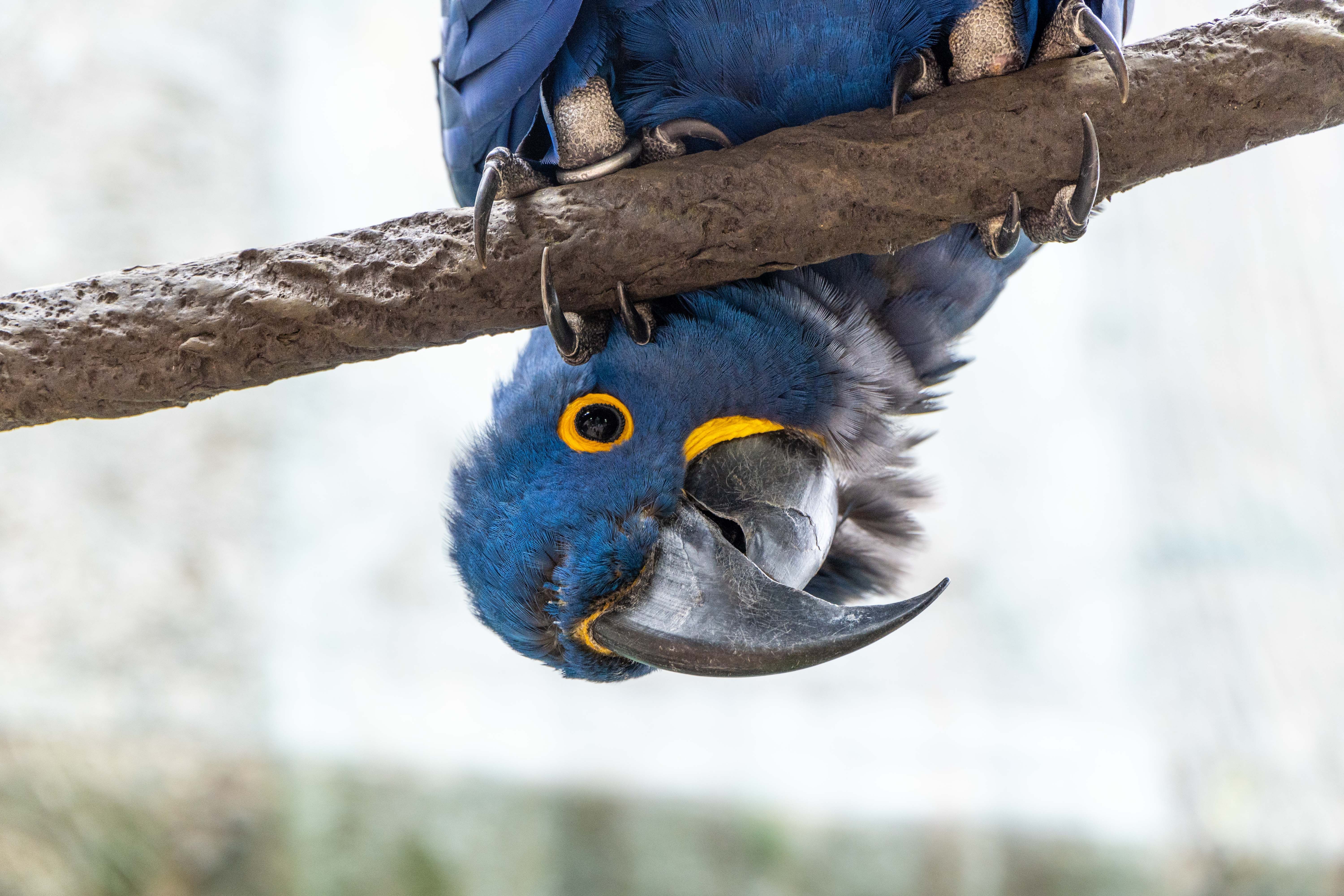
Hyacinth macaw. Its blue color is created by feather structures that scatter light.
When you look at a hyacinth macaw, its whole body appears blue. But that blue color is not made because the feather contains blue pigment. It appears blue because structures inside the feather scatter light. We call this structural color.
A similar example is the sky. When we say "the sky is blue," it is also because light scatters in the atmosphere and appears blue to our eyes.
The mutations we call "blue" often work in a similar way. When existing yellow pigments are reduced or disappear, the underlying structural color becomes visible, so the bird appears blue.
What About Green Parrots?
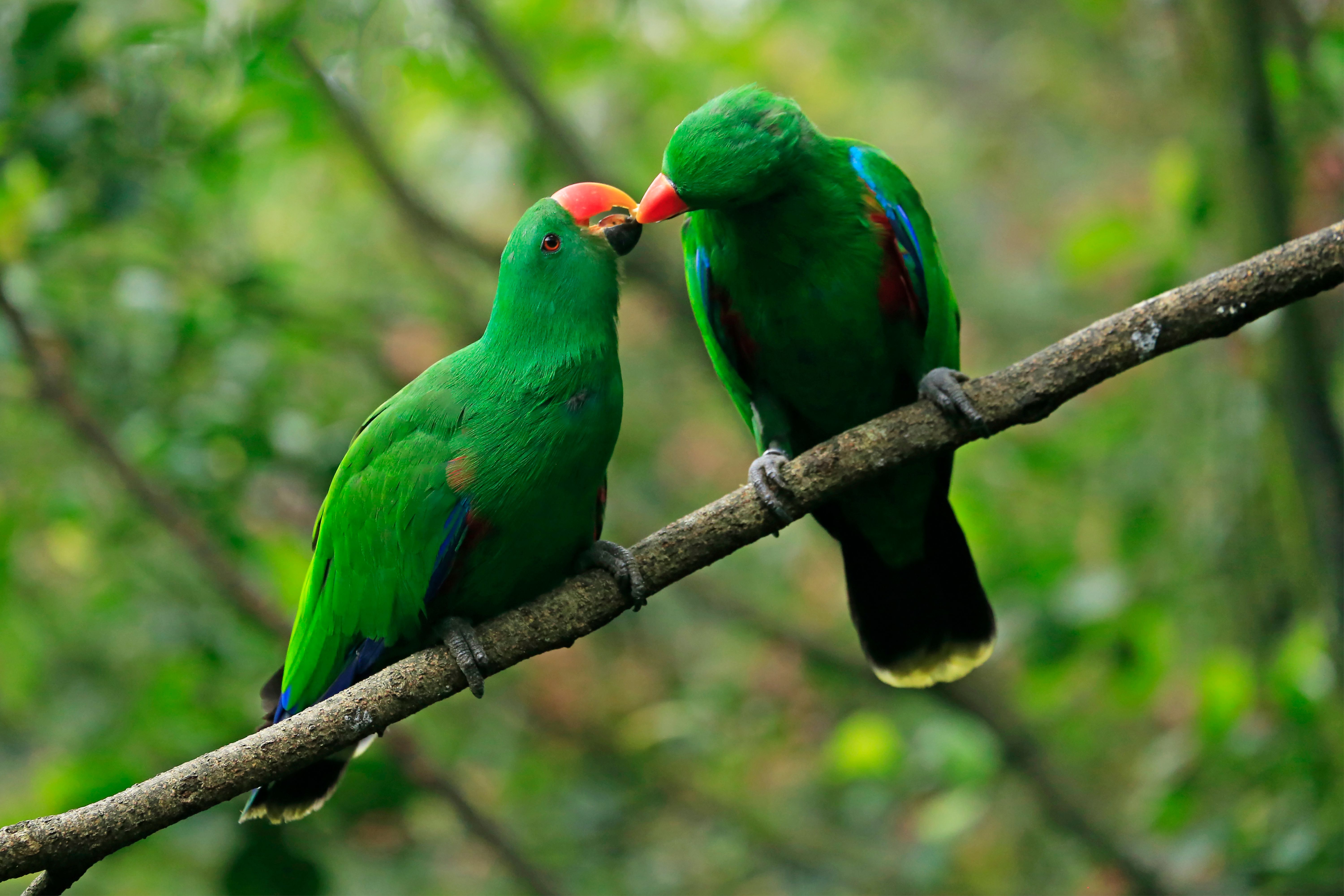
Male eclectus parrots, often known in Korea as New Guinea parrots. Females show red plumage under the influence of psittacofulvin, while males appear green because their feather structure also adds structural color.
Green parrots do not seem to fit neatly into any one of the categories above, right? That is because green is made by colors combining.
Just as blue and yellow can mix in paint to make green, parrot green is made when blue structural color overlaps with yellow psittacofulvin. So if yellow psittacofulvin disappears in a green parrot, only the blue structural color remains visible, and the bird looks blue.
Once you understand this principle, studying color mutations becomes much easier. You can start asking whether a color is something "newly added," or whether it is something that appears because an existing color has been "removed."
I plan to cover these color mutations later in a genetics series. Please look forward to that too, haha.
Feather Color Is Decided While the Feather Is Growing
Like hair, a feather is not living tissue that keeps changing forever.
While a feather is growing, the body supplies nutrients, pigments are deposited, and microscopic structures are formed. But once the feather is fully grown, it becomes a keratin structure.
That is why the color of a feather is difficult to change after it has already grown.
The biggest moment when color can change is during molt.
When new feathers grow, new pigments are deposited and new structures are formed. Of course, existing feathers can also become dull or faded over time because of sunlight, friction, bathing, dust, nutrition, or damage. But the fundamental color pattern is recreated when new feathers grow.
So when you observe changes in a parrot's feather color, compare the feathers before and after molt. If the color suddenly becomes dull, an unusual color appears, or only a specific area changes strangely, there may also be a health issue involved.
The Same Color Does Not Always Mean the Same Mechanism
Even when two colors look like the same yellow to us, the way that color is made can be slightly different.
One color may look deeper because the pigment concentration is higher. Another may look brighter because it overlaps with structural color. Another may look darker because melanin behind it absorbs light.
That is why, when we look at parrot color, it is much more important to understand which elements created that color than to focus only on the color name.
Conclusion
Parrot colors are incredibly vivid and beautiful.
Hidden inside those colors are many scientific elements: light reflection, pigment genetics, color mixing, and more.
Once you understand how a color is made and which elements overlap to create it, color mutations and genetics become much more interesting.
At Naviary, we will keep studying color mutations and genetics so we can come back with even more interesting stories.
If you have any questions, please feel free to contact us.
References
-
Berg & Bennett. The evolution of plumage colouration in parrots: a review. (2010)
-
Ke et al. Convergent evolution of parrot plumage coloration. (2024)