
 Parrot Blog
Are Parrots Really Left-Footed?
Did you know parrots can be left-footed or right-footed, much like people can be left-handed or right-handed? Let’s look at the science behind how foot preference connects to parrot intelligence, evolution, and brain development.
 Naviary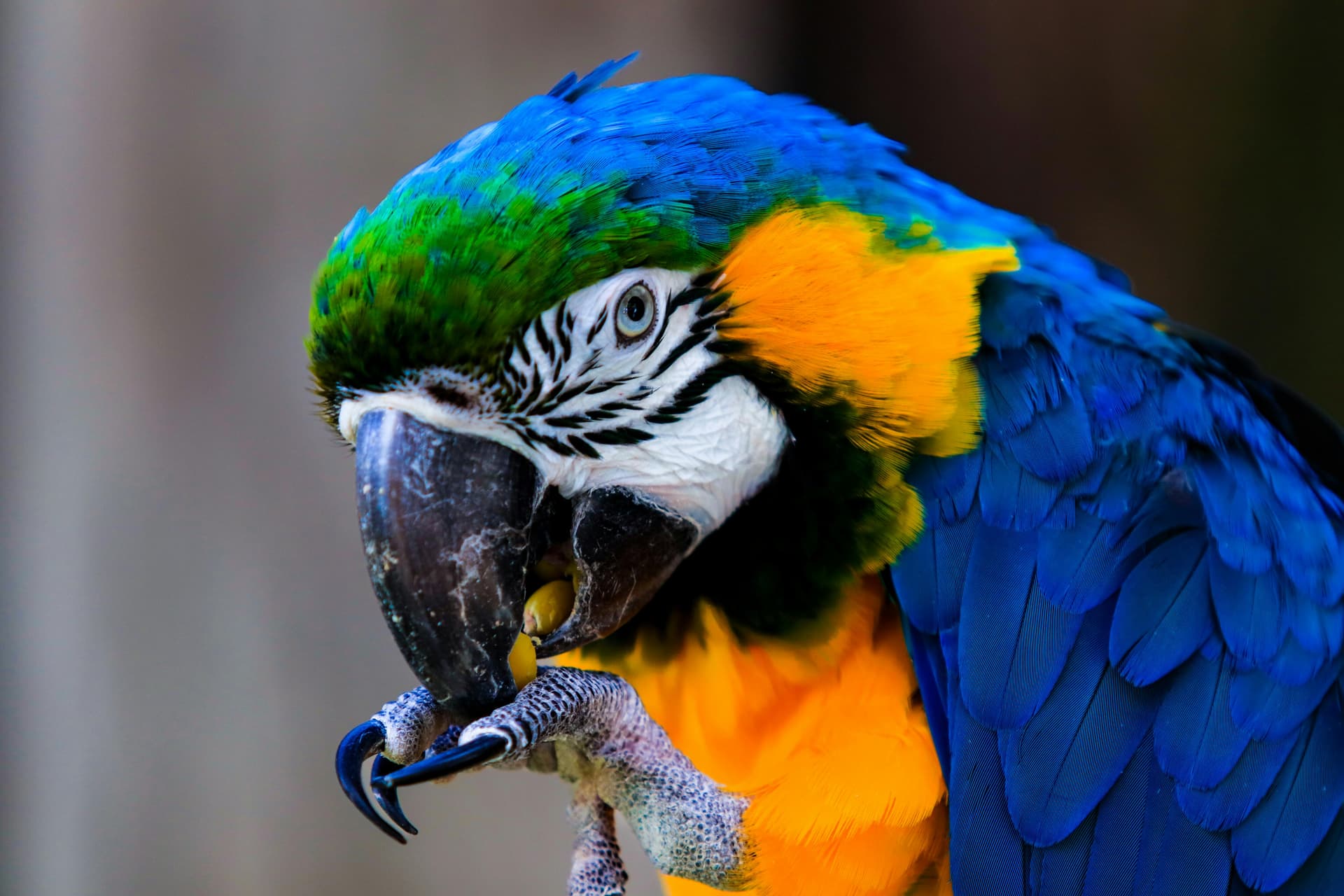
Introduction
Have you ever noticed which foot your parrot uses when eating a treat or holding a toy?
Just as people can be left-handed or right-handed, parrots also tend to have a preferred foot. Interest in which foot parrots use actually goes all the way back to the 17th century, making it a topic that has fascinated ornithologists and scientists for more than 300 years.
Surprisingly, many parrot species seem to show a left-footed tendency: they grip a branch firmly with the right foot and hold food with the left.
But this kind of "footedness" is not just a simple habit. Recent research in neuroscience and evolutionary biology suggests that the way parrots use their feet is deeply connected to their intelligence, brain size, and cognitive ability.
Parrot Feet
Compared with many other birds, parrots have incredibly refined feet.
They hold food, lift it, tear it apart, rotate toys, and use their feet almost like hands for all kinds of tasks.
Because humans use our hands so naturally, we sometimes forget how special this is. In the animal world, these kinds of behaviors are impressive and highly advanced.
Human-Like Laterality
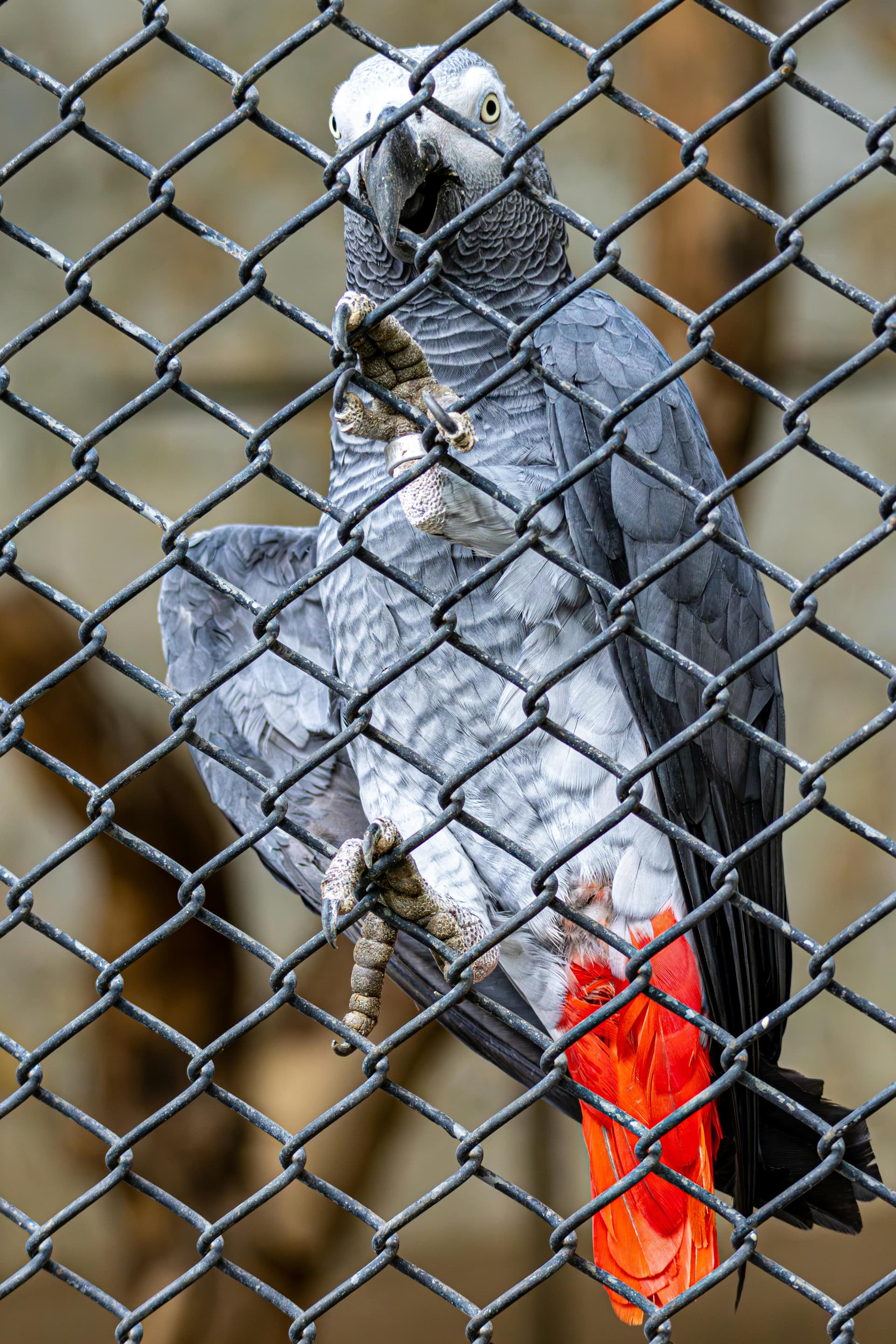
Very few animals show such strong laterality as humans do. In humans, the exact numbers vary by country and culture, but on average more than 90% of people are right-handed.
Among primates, chimpanzees are reported to be about 70% right-handed, orangutans about 66% left-handed, and cats about 55% left-pawed.
Parrots vary by species, of course, but some species such as Australia’s Sulphur-crested cockatoo are reported to be more than 90% left-footed.
Are Parrots Left-Footed?
Several studies suggest that parrots use their left foot a lot. But this claim needs to be treated carefully.
Research on foot preference in parrots has a long history, but observation conditions were not always consistent. The number of species studied was limited, and the position or presentation of food could also influence the results.
Parrots are not one single kind of animal. They are a group of hundreds of species, and those species can be very different from one another. This is one reason we need to be careful when thinking about parrots, especially compared with familiar companion animals like dogs and cats. If you have not read it yet, Naviary’s earlier post, Understanding Parrots: Why They Are Completely Different Companion Animals from Dogs and Cats, is a good place to start.
For example, an experiment might study Sulphur-crested cockatoos, but parrots such as kea or kakapo could show different patterns.
Also, if a person offers food with their right hand, the food may be closer to the parrot’s left side. In that case, the parrot might take it with the left foot simply because it was easier to reach. It becomes difficult to tell whether the parrot is truly left-footed, or whether the food just happened to come from the left.
Strength May Matter More Than Direction
What is especially interesting is that whether a parrot uses the left or right side may matter less than how strongly it favors one side.
In one laterality study on Australian parrots, researchers used two different tasks.
The first task asked parrots to distinguish edible seeds from small pebbles that looked similar to seeds. The second involved food hanging from the end of a string, which the bird had to pull up in order to eat.
The results showed that individuals that used one eye or one foot more consistently, whether left or right, performed better on the tasks. This was especially clear in complex problems like string-pulling, where the bird needed to coordinate not just the foot, but also the eyes, beak, balance, and overall body control.
This connects to the advantages of brain lateralization.
If the two hemispheres of the brain are not doing exactly the same thing, but instead divide information processing between them, the brain can work more efficiently. One side might focus on detailed information about food and objects, while the other processes surrounding threats or other environmental cues.
Do Larger Parrots Use Their Feet More?
One study compared foot preference across 23 Australian parrot species and found that larger parrots tended to show stronger foot preference.
Intuitively, this makes sense. Large parrots often handle hard seeds, nuts, and other foods that are difficult to eat with the beak alone.
By contrast, species that mainly eat small seeds, flowers, nectar, or softer foods may not need to hold food with their feet as often. Eating directly with the beak is usually more efficient.
So in species that manipulate larger food items, the ability to use the feet and beak together becomes more important. Over time, this may have favored more consistent use of one foot.
That said, it is better not to say, "They have foot preference because they are big." A better way to think about it is, "The lifestyle of handling larger food items is connected to foot preference."
Is It Related to Brain Size Too?
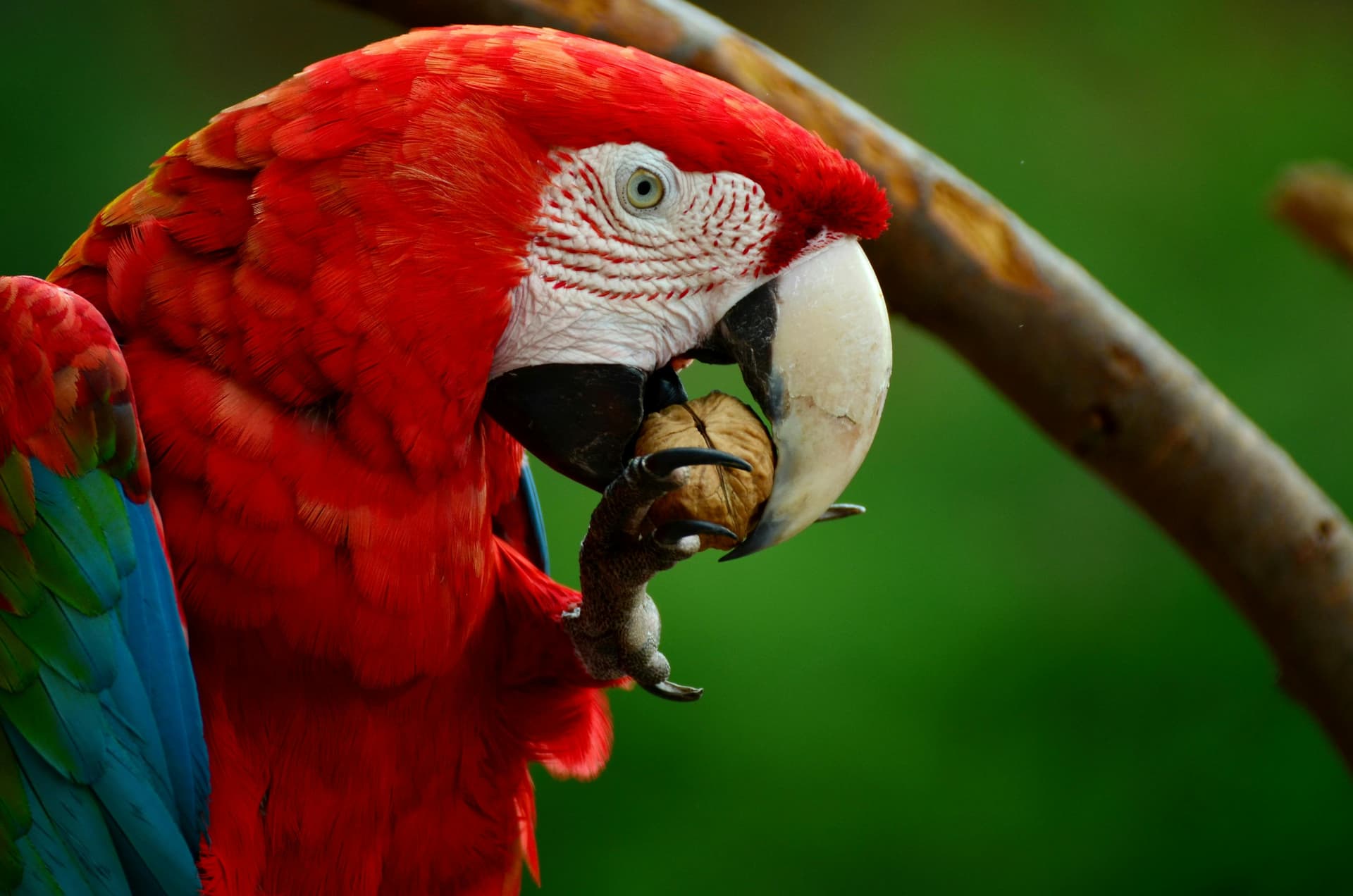
Another study used data from 25 Australian parrot species to examine the relationship between foot preference and brain size.
The results showed that species with stronger foot preferences tended to have larger brain mass. The rate of left-foot use was also related to the relative size of a brain region called the nidopallium.
The nidopallium is part of the avian forebrain, and it is often functionally compared with parts of the human cerebral cortex. It is involved in learning, choice, executive function, and complex information processing.
When a parrot holds and manipulates food with its foot, it is repeatedly doing all of these things:
- looking
- judging
- grasping
- adjusting
It is a surprisingly complex motor behavior. Because the manipulation is more complicated than it looks, the brain is also working hard, and that kind of activity is part of development too.
What About Your Parrot at Home?
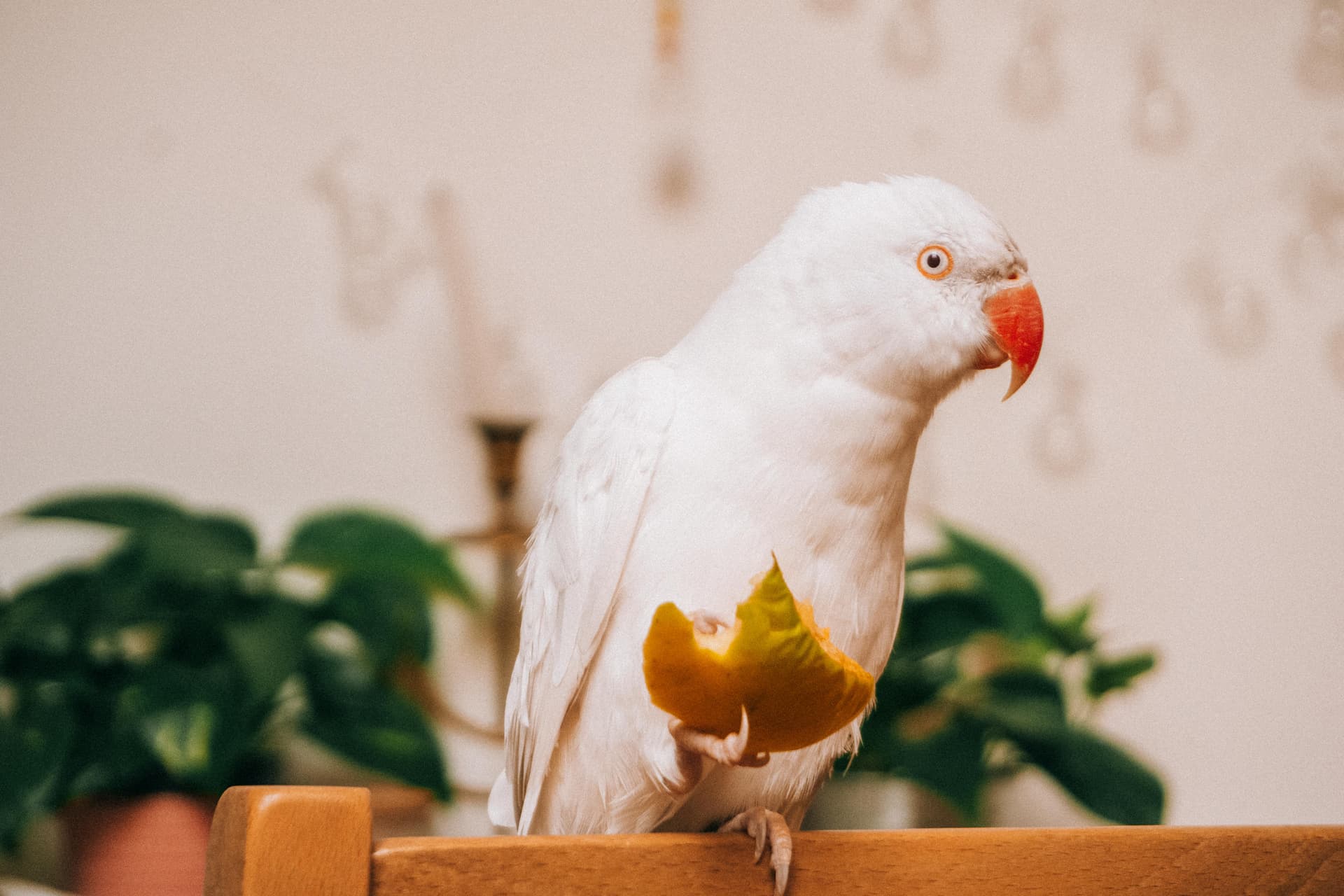
Instead of always cutting food into tiny, convenient pieces, try offering treats in a way that lets your parrot use their feet and think a little.
Of course, safety comes first.
Avoid anything so hard that it could cause injury, anything that could trap the feet, or any structure that might damage the beak.
For example:
- Do not chop vegetables too finely every time
- Offer treats in pieces large enough to hold and tear apart
- Provide food together with safe branches or leaves
- Let your parrot work food out of foraging toys
This kind of setup can help you notice which foot your parrot prefers. It also encourages natural foraging behavior and supports mental development.
These are the same ideas we emphasized in our foraging post.
What Naviary keeps emphasizing is ultimately similar.
Good husbandry does not end with a clean cage, good food, and the right temperature.
We need to understand what kind of animal each parrot is, design an environment where natural behaviors can appear, and provide a space where parrots can live healthy and happy lives.
Conclusion
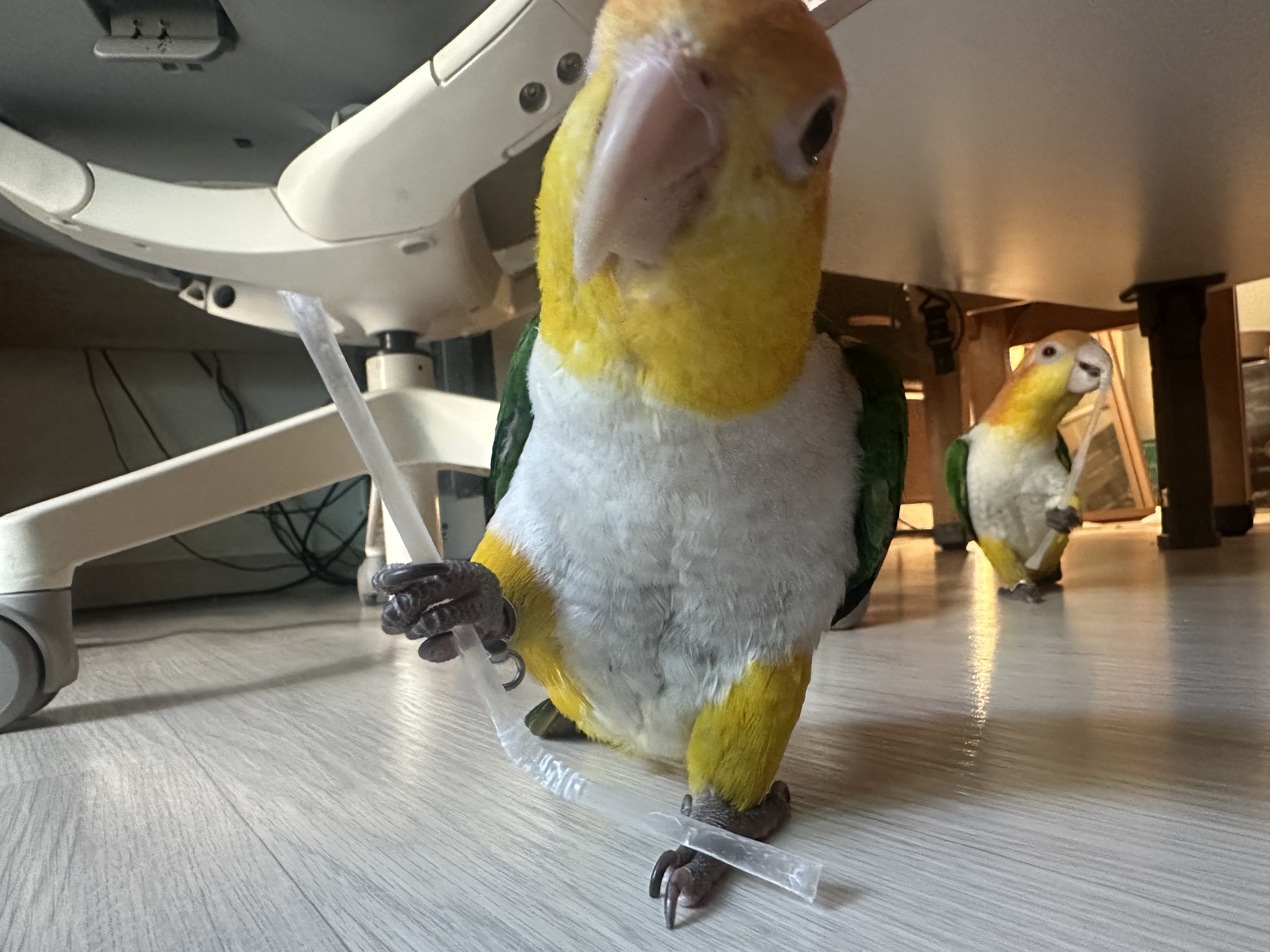
Naviary’s Junbae is right-footed, and Changsik is left-footed.
So let’s go back to the first question. When your parrot eats a treat or holds a toy, which foot do they usually use?
If your bird uses the right foot while many others seem to use the left, there is no need to feel disappointed. What matters more is creating an environment where that individual bird can use, analyze, and manipulate the world with the foot they naturally prefer.
Left-footed or right-footed is a fun topic. But the more important point is that we can help parrots develop their abilities by giving them an environment that invites them to use those abilities.
At Naviary, we plan to keep studying research like this while building our own experience through careful observation. Through records, we want to go beyond simply saying, "This bird likes this." We want to understand more closely how each individual sees and interprets the world.
We hope to keep learning, gaining experience, and contributing to a healthier and happier breeding culture.
References
-
Harris, L. J. Footedness in Parrots: Three Centuries of Research, Theory, and Mere Surmise. Canadian Journal of Psychology. (1989)
-
Magat, M., & Brown, C. Laterality enhances cognition in Australian parrots. Proceedings of the Royal Society B. (2009)
-
Brown, C., & Magat, M. The evolution of lateralized foot use in parrots: a phylogenetic approach. Behavioral Ecology. (2011)
-
Kaplan, G., & Rogers, L. J. Brain Size Associated with Foot Preferences in Australian Parrots. Symmetry. (2021)