
 Parrot Blog
Naviary's Singapore Trip, Part 1: Bird Paradise
A trip to Singapore's Bird Paradise to enjoy and learn about the places animals call home. Sharing the delight of vast aviaries, birds going about their lives, and the thoughts they inspired.
 Naviary
Naviary's Singapore Trip
Introduction
As I prepare to get Naviary up and running, I keep thinking about what makes a good environment for the birds in our care.
Photos and reading can teach us a lot, but I think it’s also important to see thoughtfully designed animal care environments firsthand. Learning how others care for their animals helps us develop a better eye for what makes a good environment, and I see that willingness to learn as part of being a breeder. With that in mind, the Naviary team took a trip to Mandai Wildlife Reserve in Singapore.
And honestly, the Naviary team finds joy in simply watching animals go about their lives and taking in the spaces they call home. This trip was full of both a desire to learn and our own eagerness to indulge in something we love, so we had a wonderful time looking around and exploring the things that sparked our curiosity.
Our first stop was Bird Paradise.
Bird Paradise is Asia's largest bird park, home to more than 3,500 birds from over 400 species. The entire park is built around birds, with eight large aviaries that visitors can walk through. (Official overview)
In this post, rather than introducing the species you can see at Bird Paradise, I’ll share what the birds’ living environments are like, how human care fits into their everyday lives, and what we felt and learned from watching them.
1. Stepping into the Birds’ World
My first thought on entering one of the large aviaries was just how enormous it was. It felt as though an entire piece of nature had been recreated, with a scale that was genuinely awe-inspiring. Seeing several of these spaces connected, with birds grouped by habitat, made an impression too.
Standing inside that vast space felt truly special. I wish photos and words could fully convey what it was like to be there.
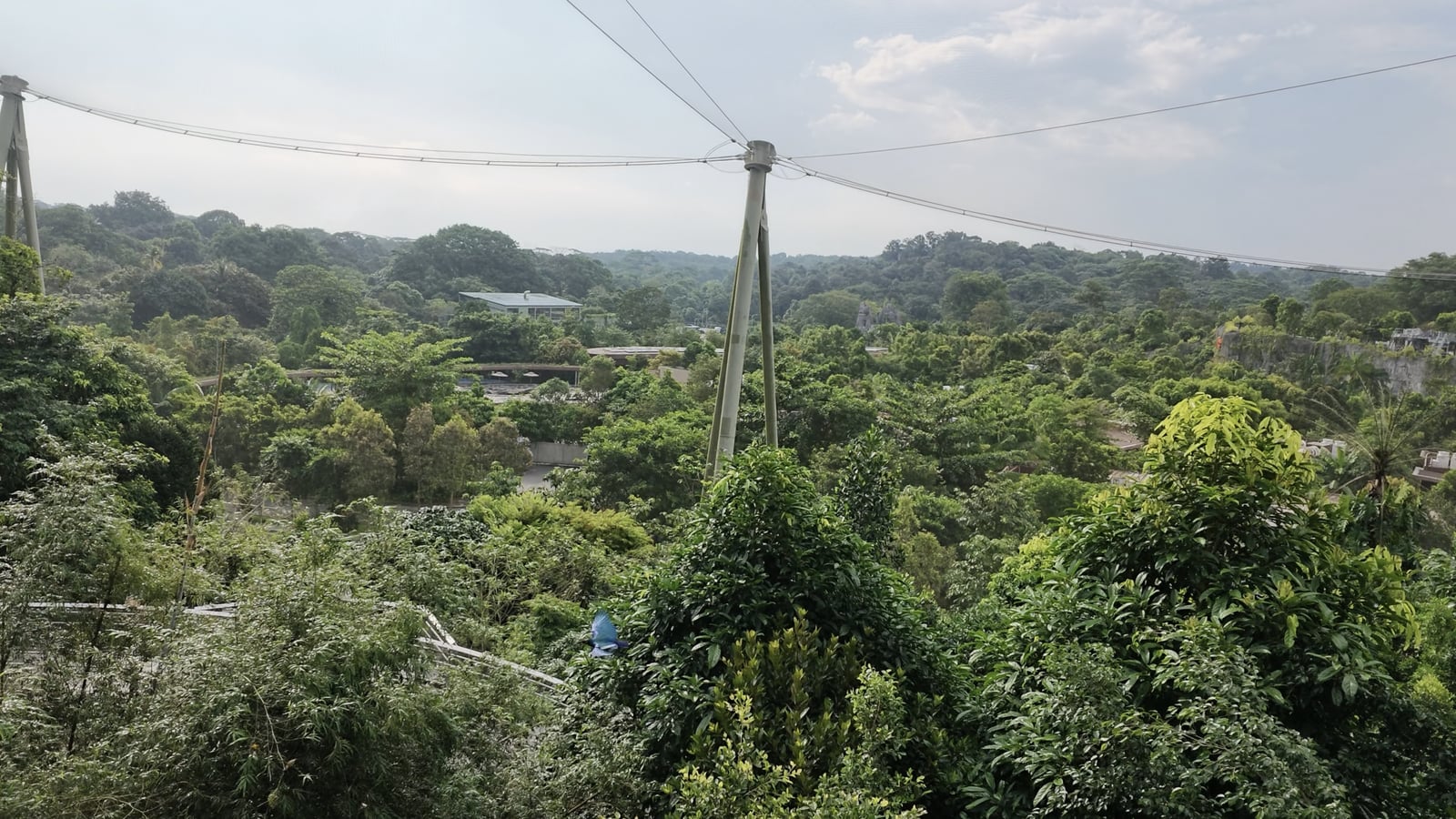
Looking out across the trees, I felt as though I had stepped into an enormous forest.
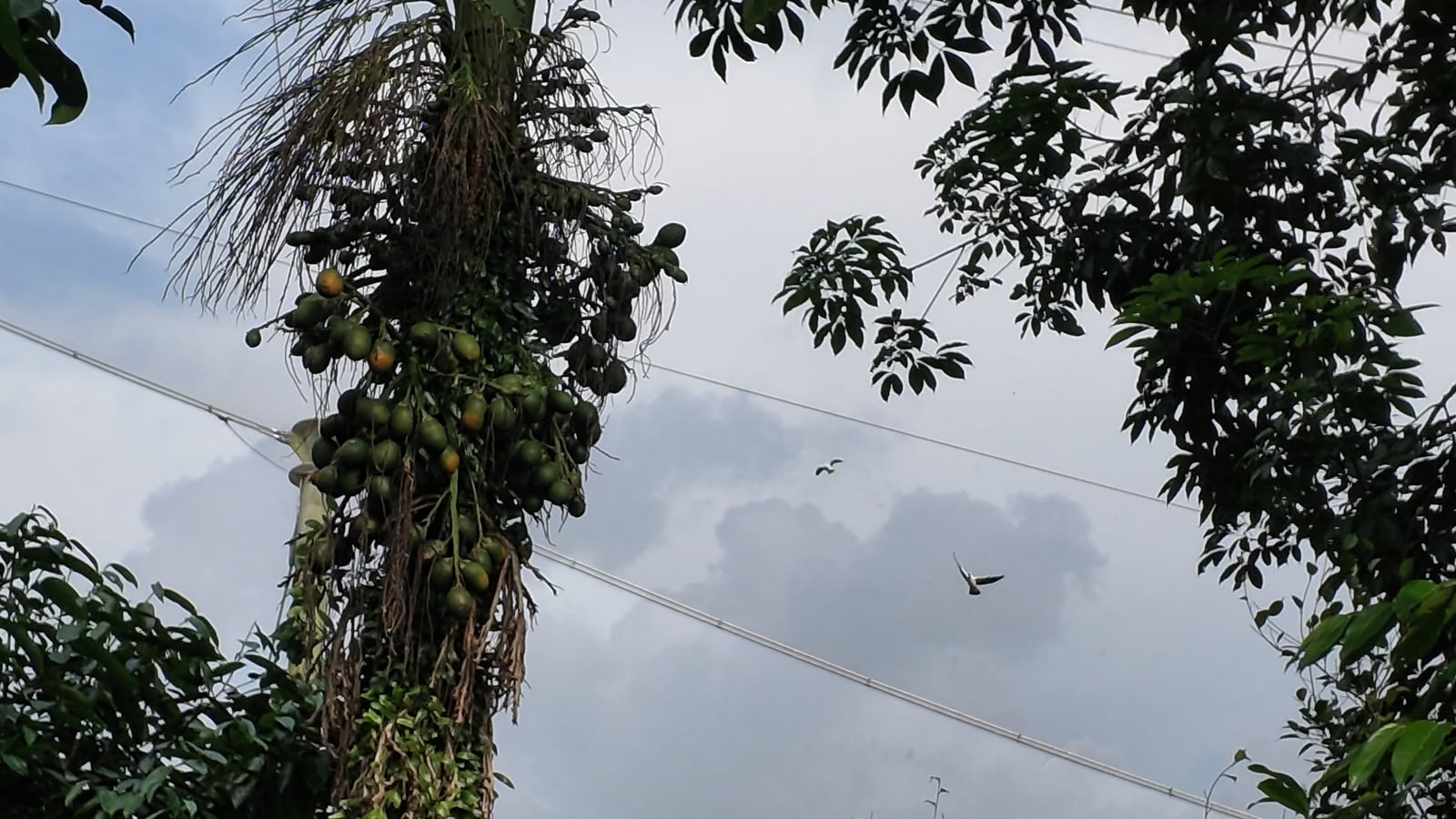
Can you spot the birds between the trees? Does it give you a sense of how high they have room to fly?
Bird Paradise's aviaries draw on habitats from different parts of the world. Each zone takes inspiration from a different environment, including African forests, South American wetlands, Southeast Asian rice paddies, and Australian eucalyptus forests. (Park design overview)
I still remember the streets lined with tall trees that greeted us as soon as we arrived in Singapore. There were plenty of tall trees inside the aviaries too, and in the vast enclosures surrounding them, some birds were so high up that they were difficult to spot from below. Heart of Africa is a good example. This zone is modeled on a forested African valley, and according to the official description, more than 150 existing large trees were preserved during construction. (About Heart of Africa)
What would it have been like to look for birds in those treetops in an actual forest? We probably would have spent quite a while looking up through binoculars or a spotting scope. Here, though, walking along bridges at different heights let us see the forest from both below and above. That meant we could watch birds living high in the trees from closer to their own eye level.
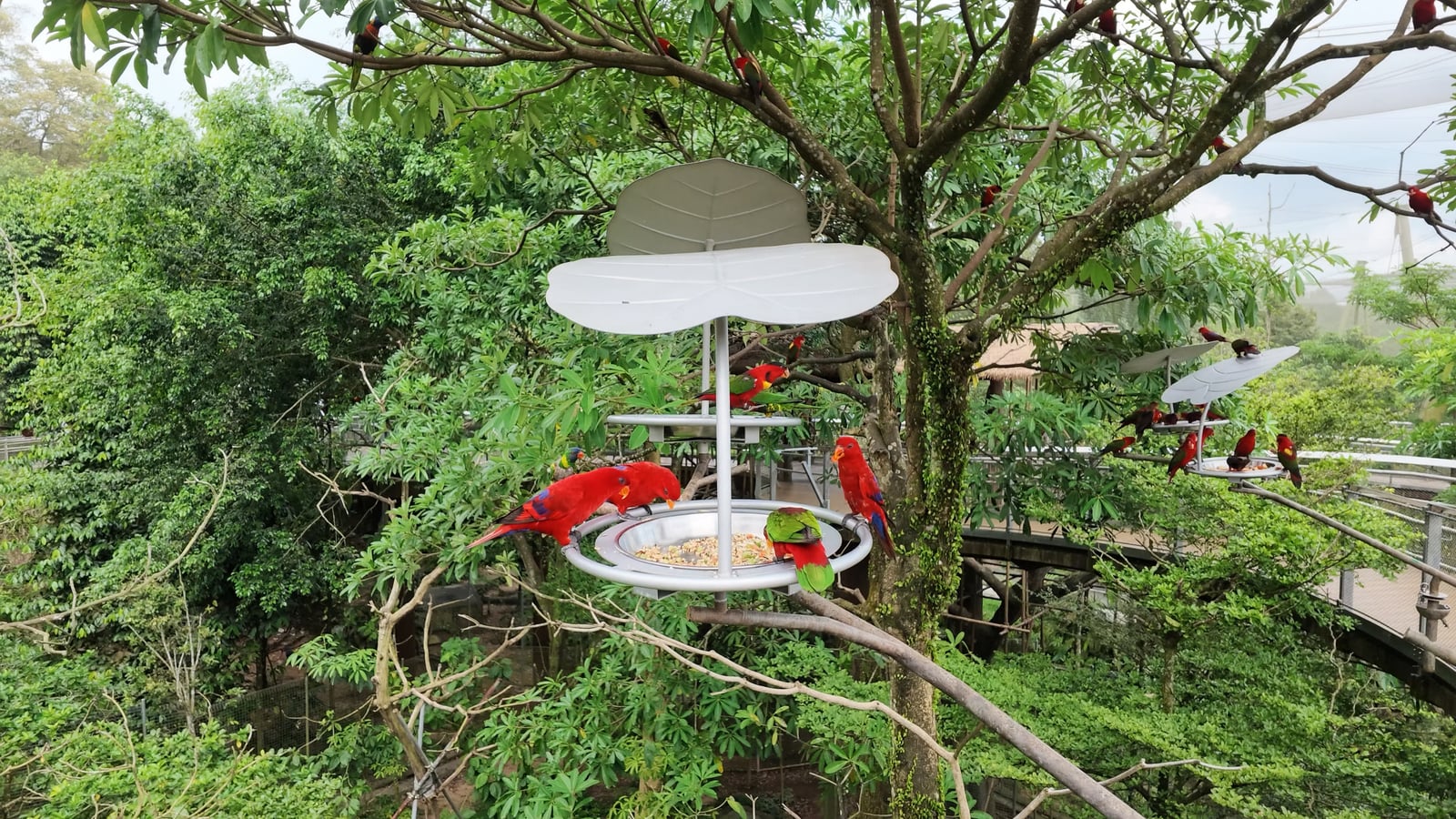
From the elevated path, we could watch birds in the trees at close to eye level.
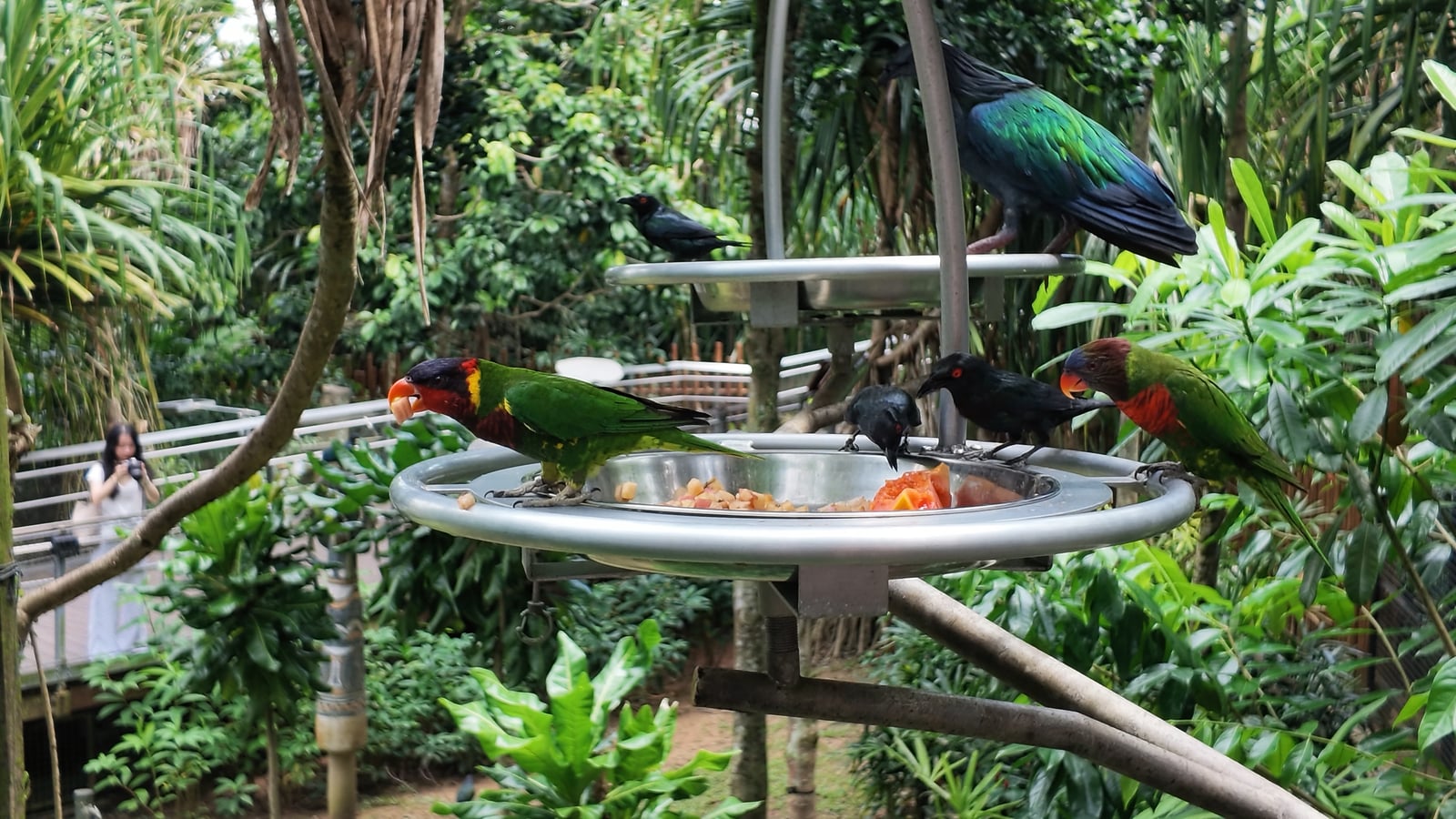
Can you spot the visitor at the lower left? They give a sense of the height difference from where I took this photo.
What impressed me was how the paths let people become part of the scene and watch the birds while respecting their living space. I felt that real care had gone into finding routes that offered a good view without intruding on the birds and their surroundings. Walking along them, I felt like part of that space too.
Inside the aviary, I felt less like a visitor who had come to see birds and more like someone briefly stepping into the natural world they called home. The trees and planting were more than scenery; they formed the birds’ living space.
The tall trees offered shelter, while their fruit provided the birds with abundant food. Foraging, the process of finding and obtaining food, was taking place among the very branches they lived in. Being able to watch a bird enjoying its fruit from so close felt like a special experience.
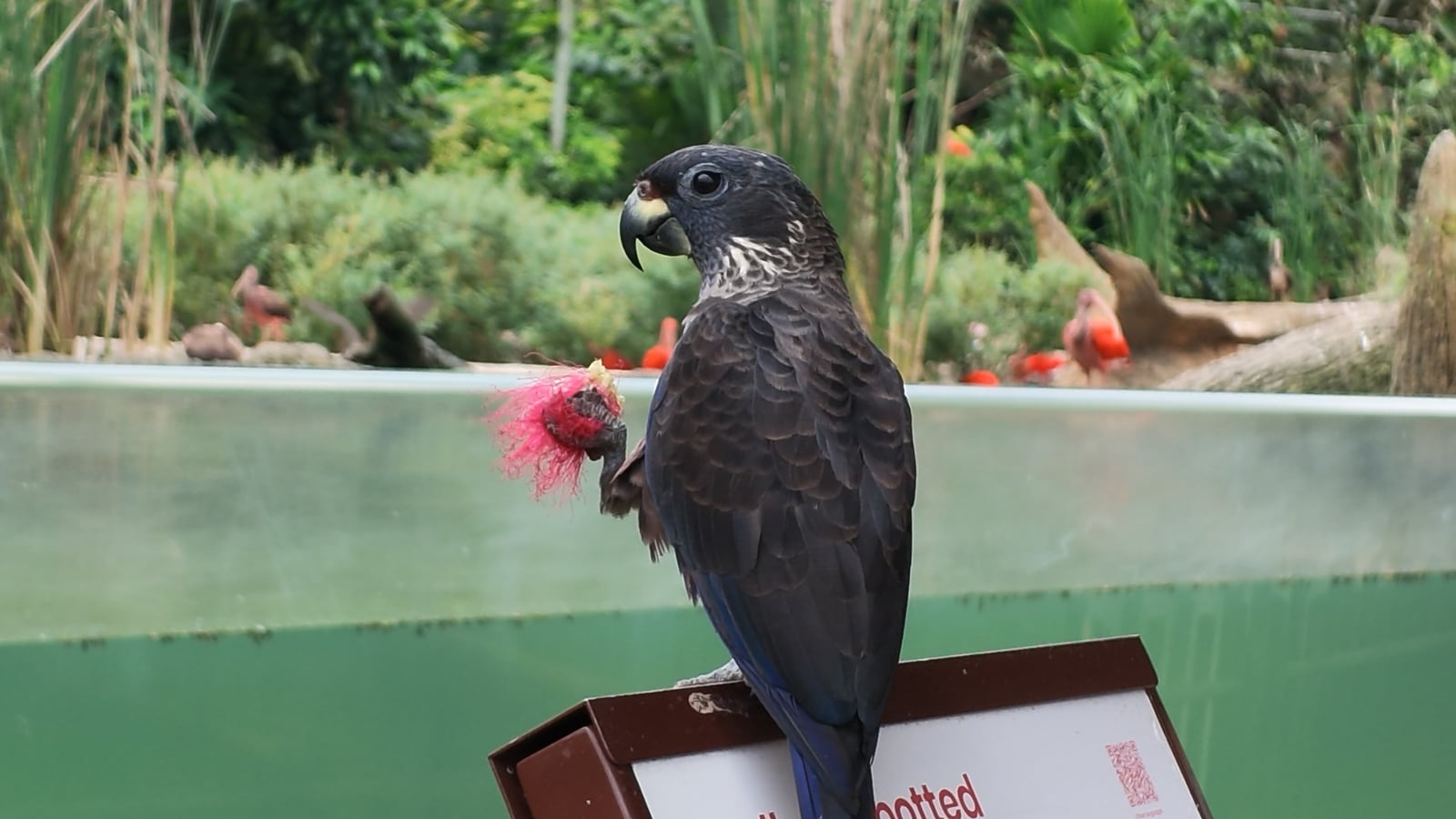
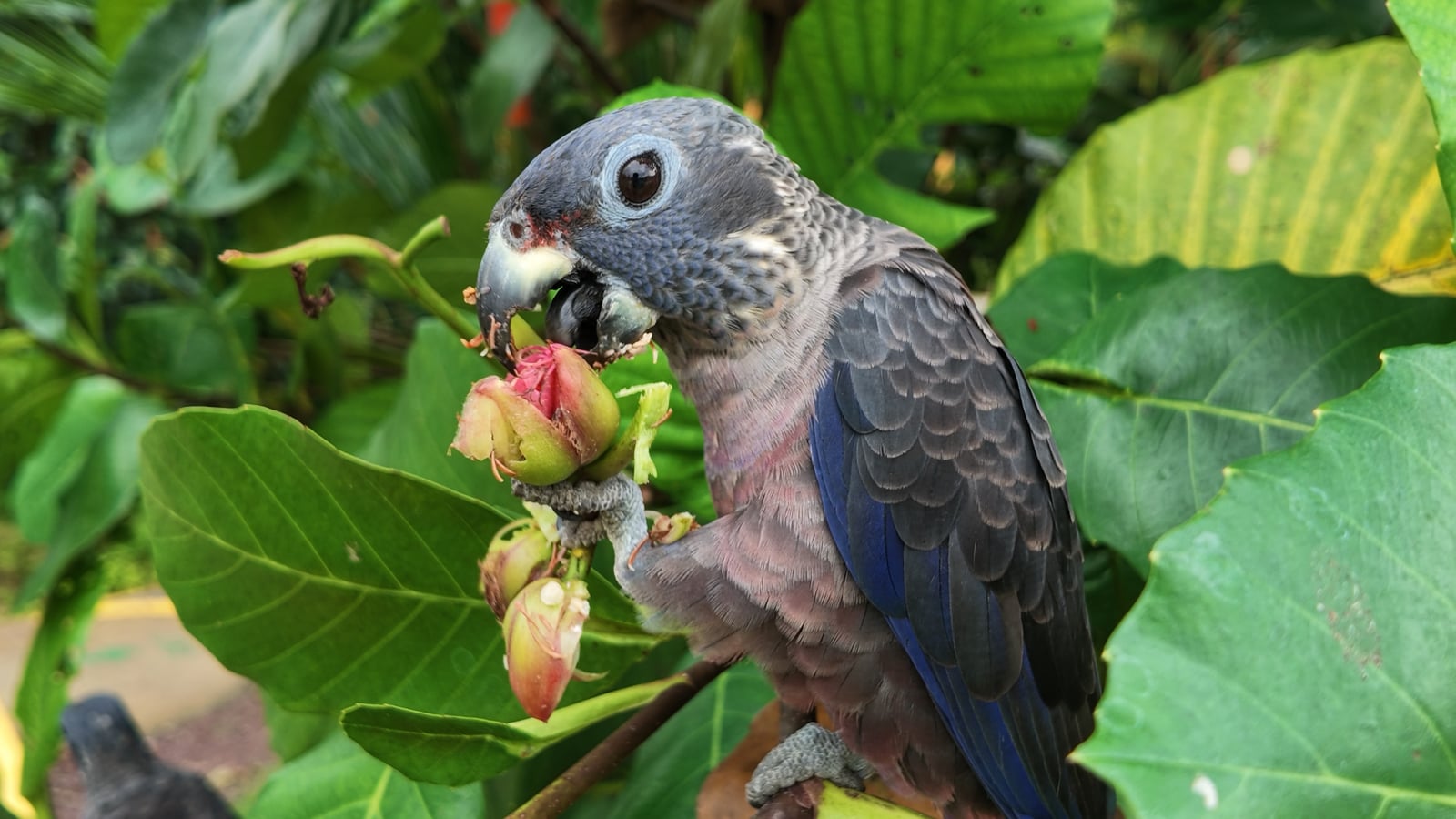
It was enjoying its food so much that it paid us no attention, even as we watched for quite a while.
In Wings of Asia, some of the fruit trees that originally grew on the site were retained. The park explains that fruit-eating birds can feed on them when they bear fruit. (About Wings of Asia)
2. Human Care Alongside Nature
Alongside birds eating fruit from the trees, keepers were setting out food at feeding times. Seeing food from the planting alongside food provided by people made me curious about the care supporting this seemingly natural everyday life. We also paid close attention to the efforts of the keepers whose care helps sustain this environment.
The food preparation area was visible to visitors, so we could see the arrangement of work surfaces, tools, and feeding bowls. It was lovely to get a glimpse of where the food we saw in the aviaries was prepared.
Some of the care of young birds was also on view, so we were able to take a quick look. I checked the bedding and the setup inside, and nothing struck me as particularly unusual in what I could see. The babies, though, were absolutely adorable. Look at the little one that seems to be kicking to the right, haha.
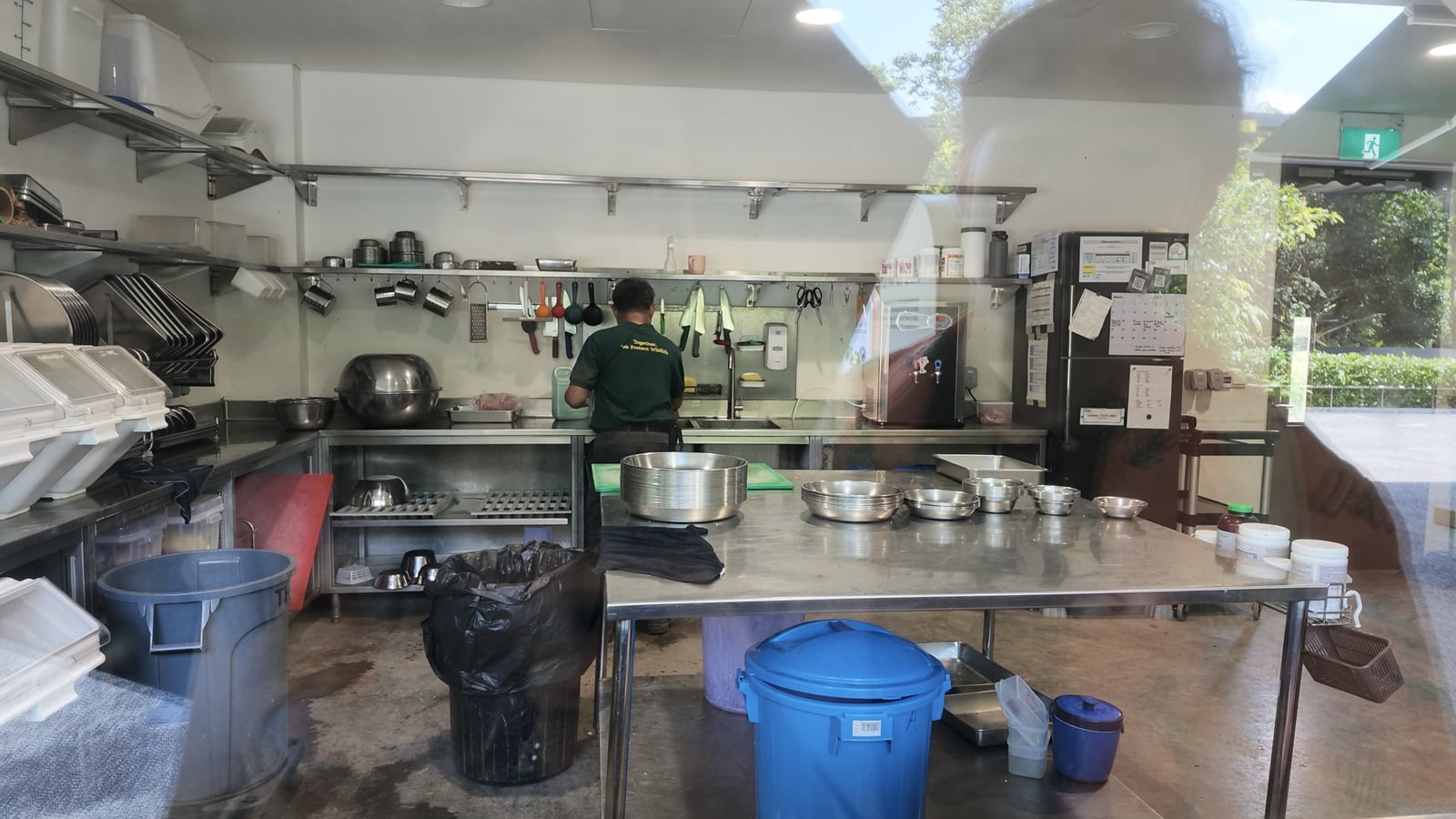
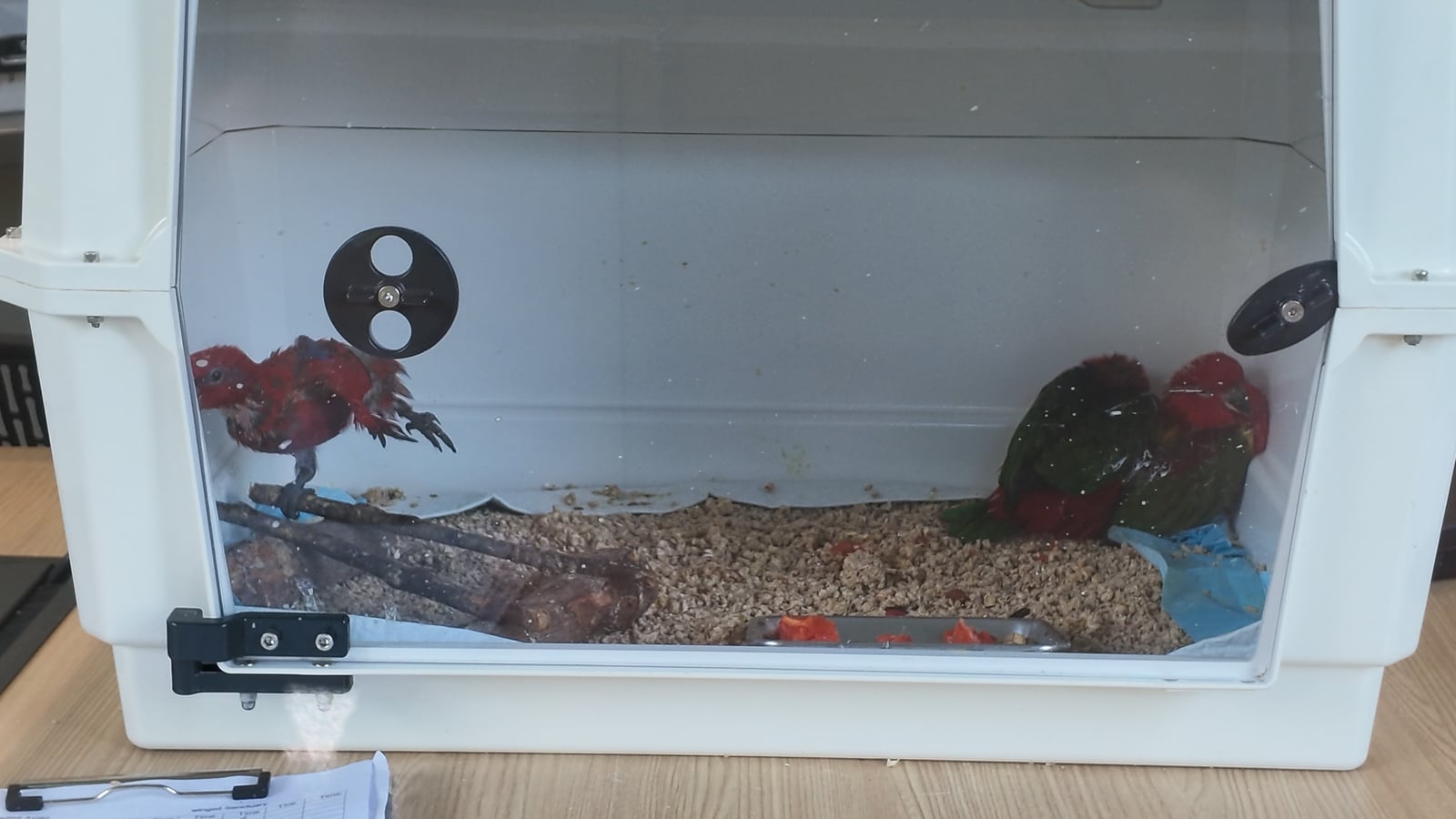
A glimpse of the food preparation area and the space where young birds were being cared for.
Arriving at feeding time while exploring the aviaries let us take a closer look at what the keepers offered and how they served it. With several species sharing each area, we noticed the care taken to select and offer foods to meet each species’ nutritional needs.
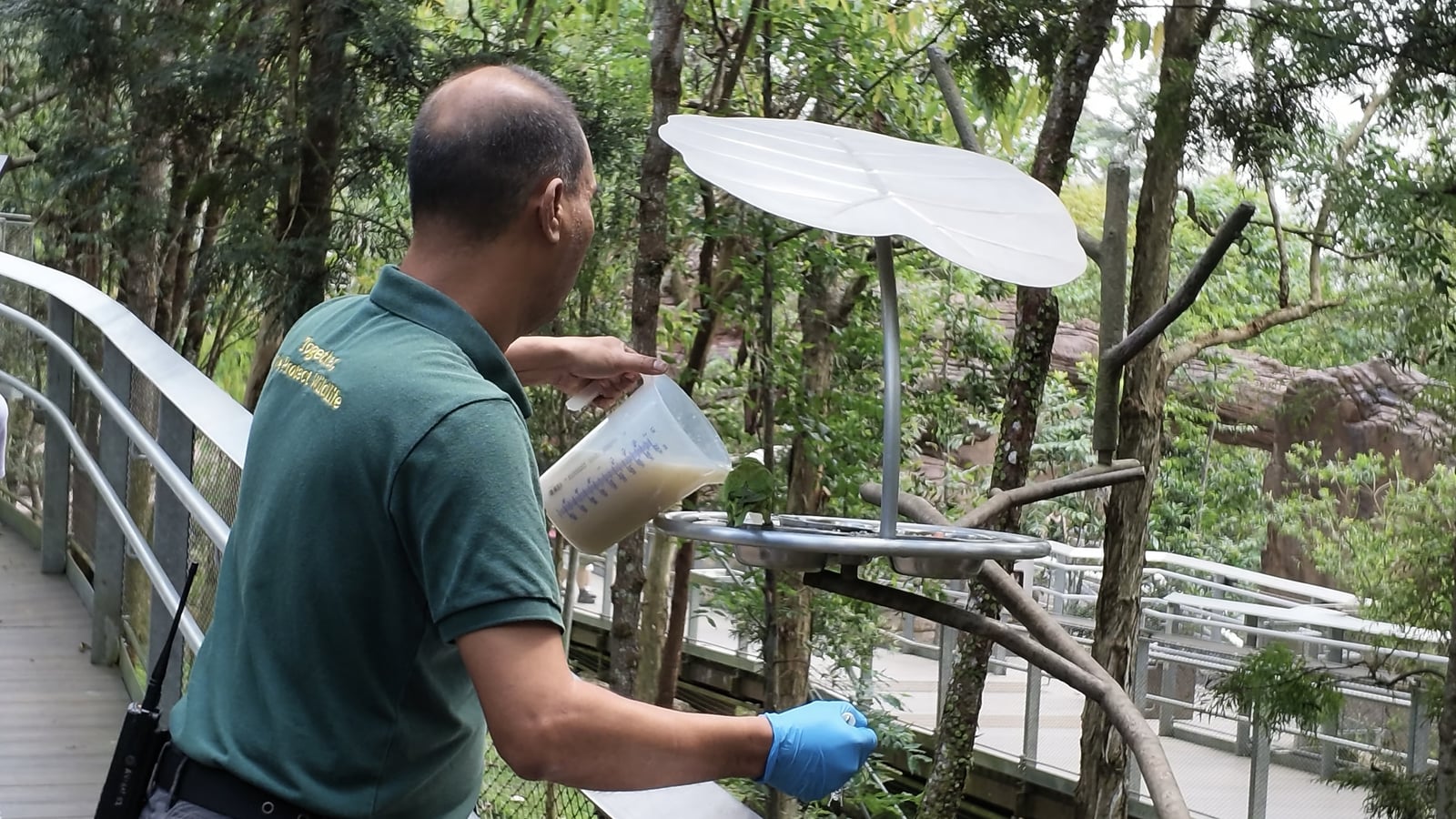
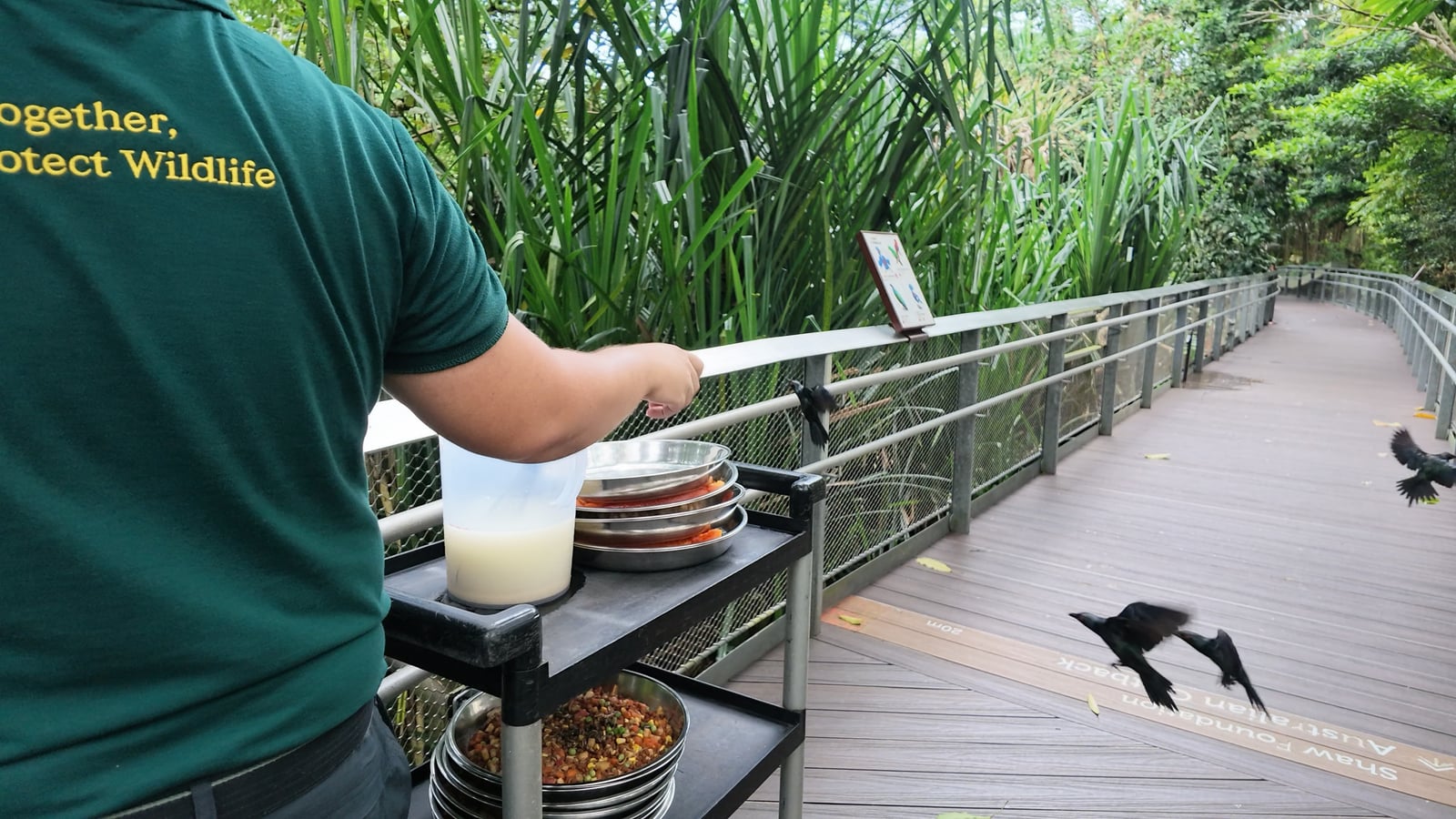
Naviary breeders curious about the food, and birds flying in eagerly to eat it
Despite the heat and the food being out in the open, I didn't see flying insects gathering on it while I was watching. I also saw the food being cleared away after a period of time. Feeding will be part of everyday life at Naviary too, so I was interested in how food was checked and managed after being set out, as well as what was offered.
In its official animal welfare guidance, Mandai explains that diets are tailored to species, age, and health, and that feeding also supports natural behavior. (Mandai's animal welfare approach)
The birds used more than trees and plants. I also saw them tucking themselves beneath a leaf-shaped cover made by people and perching on structures. There were separate enclosures among the trees too. I did not know why birds were being managed separately, but these human-built facilities were part of the landscape that felt so natural.
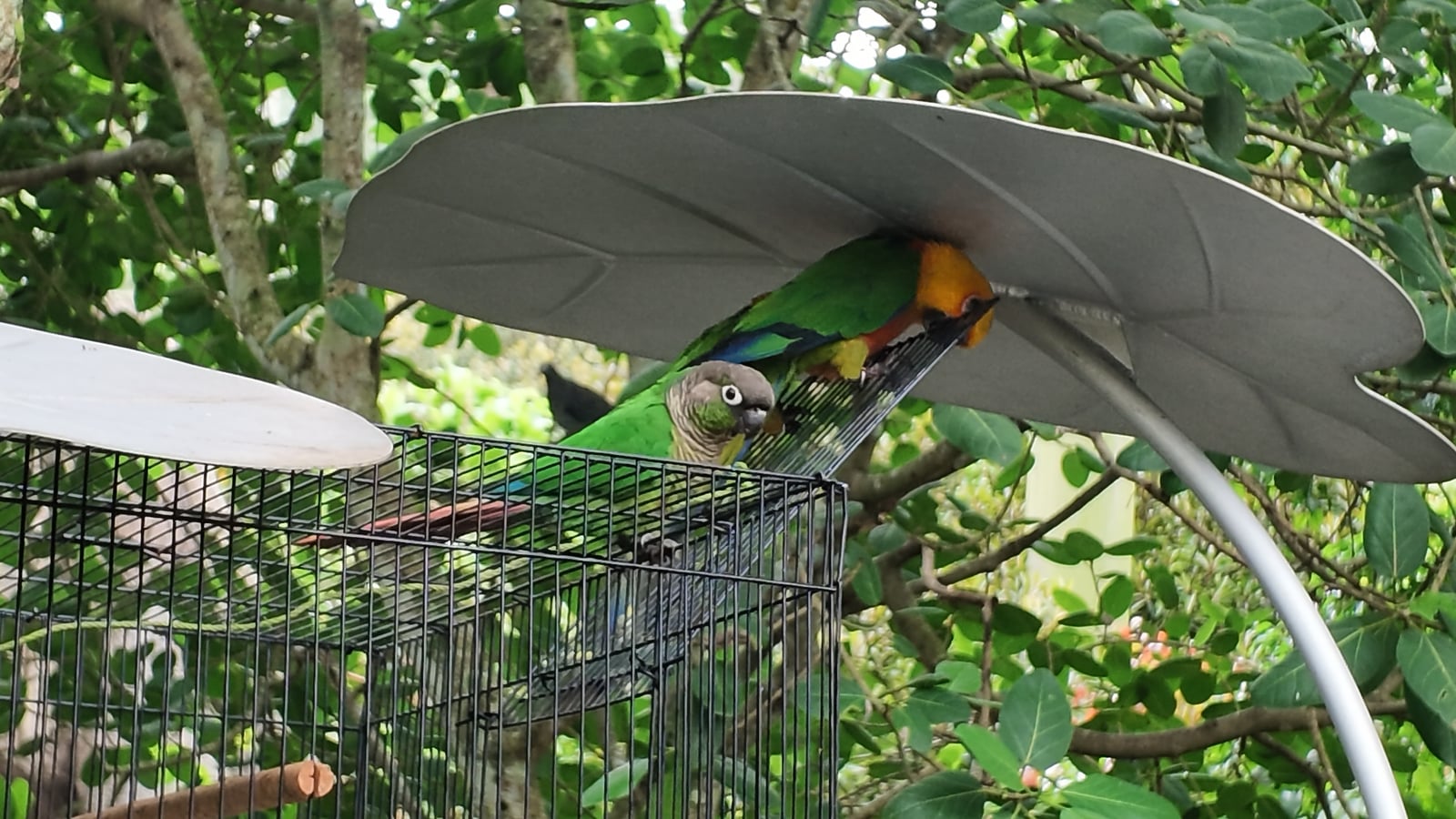
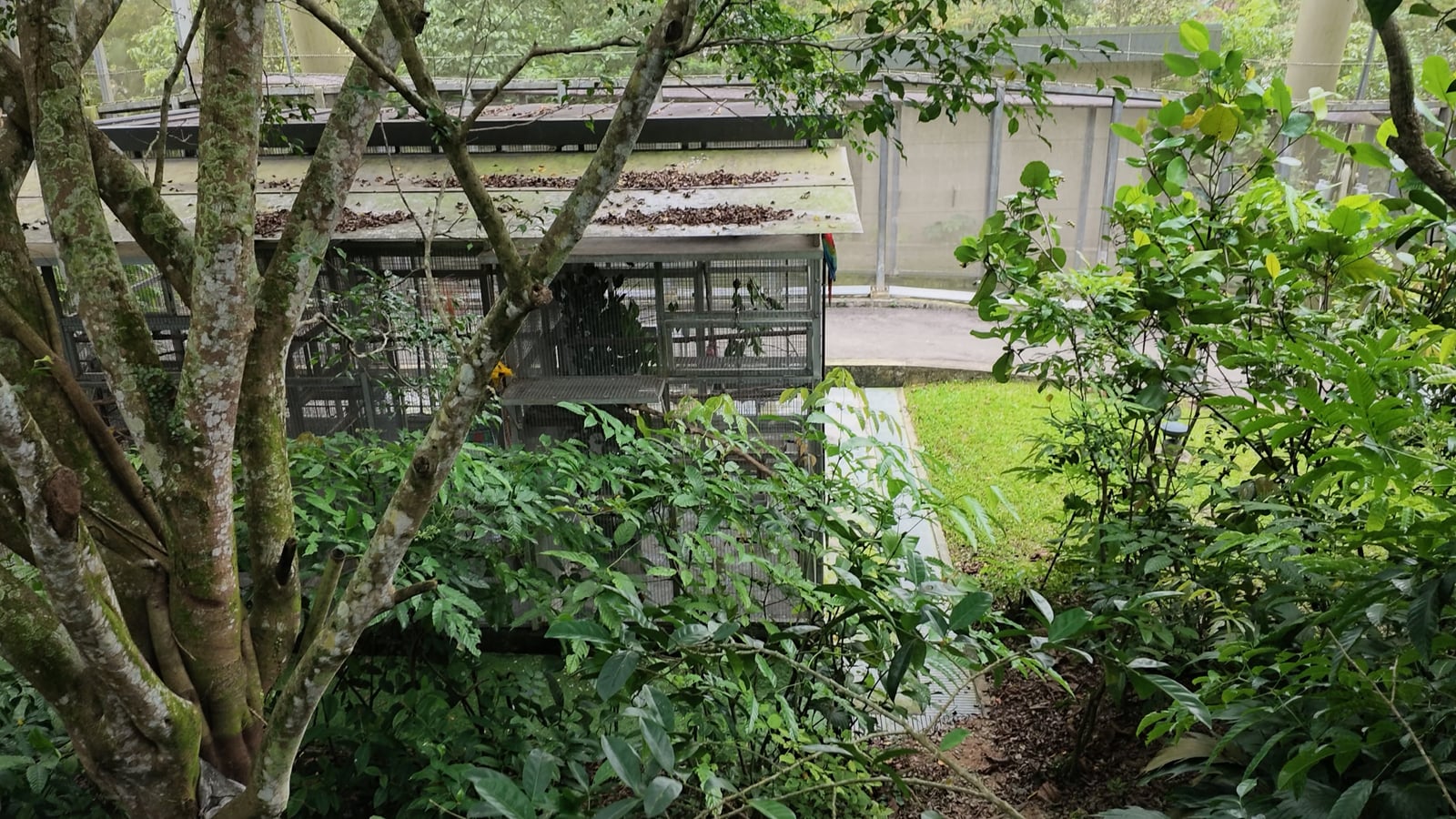
Human-built structures among the trees were part of the birds’ living space too.
We also had valuable opportunities to ask the keepers we met about things we were personally curious about. Going beyond what we could observe and talking with the people who actually care for the birds made this a special experience.
We asked about the insights and practical knowledge they had gained from caring for many different bird species up close every day, as well as how they managed food, and received helpful answers. We’ll gradually share what we learned, combining and refining it with our own experience of running Naviary. Stay tuned, haha.
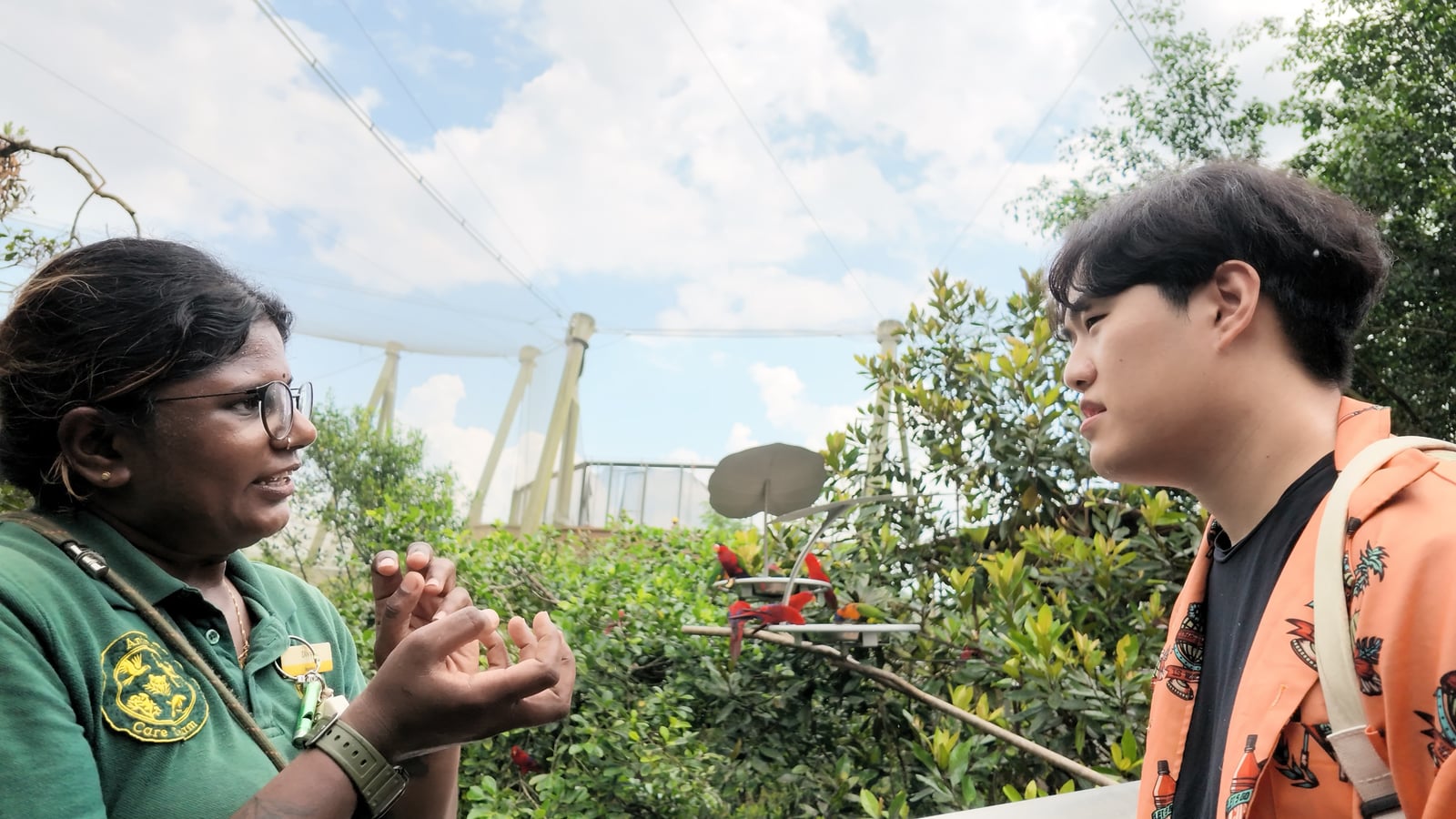
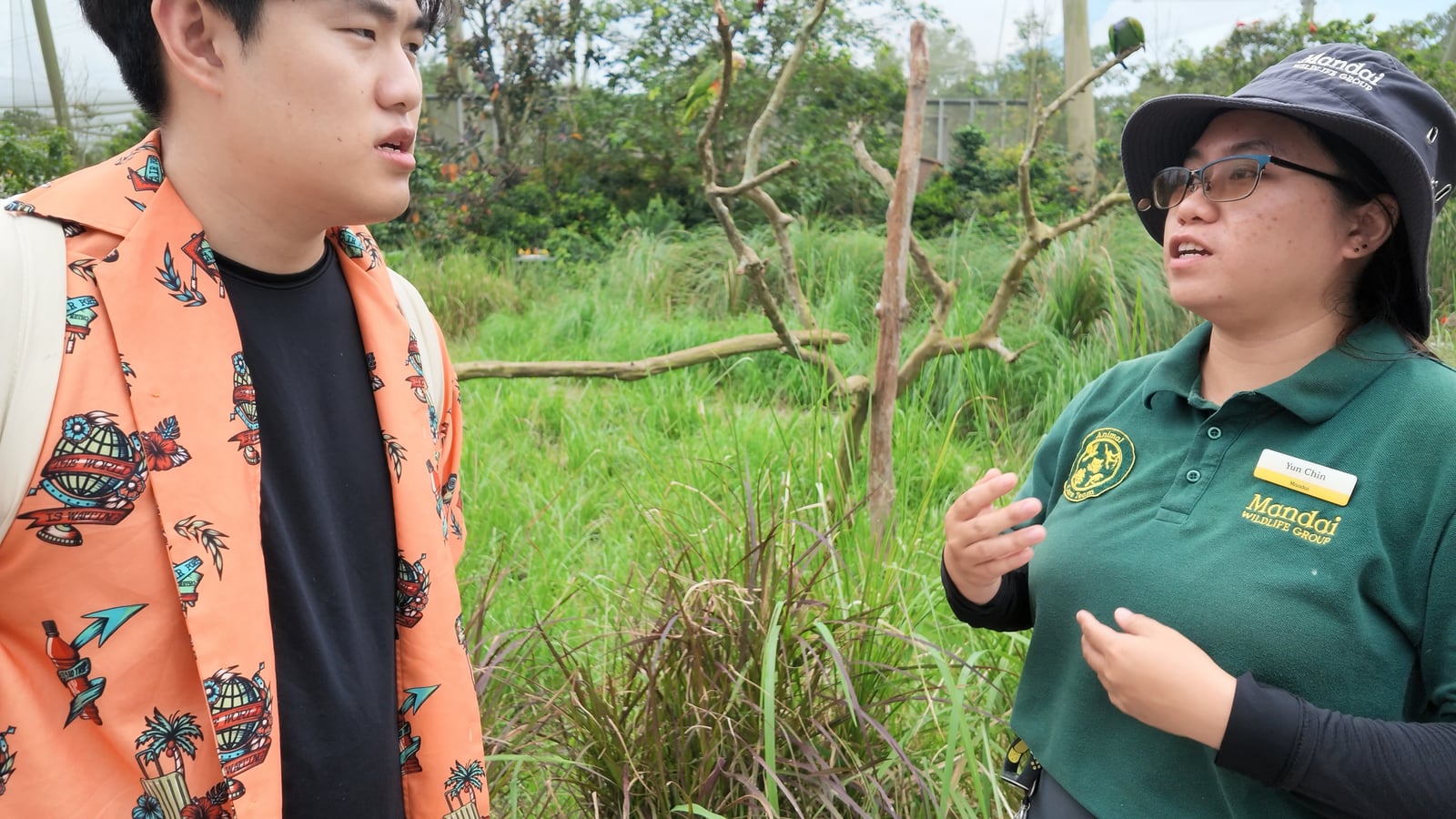
Introducing Naviary’s CEO for the first time, lol. Doesn’t the outfit alone tell you how excited they are?
From the food preparation room to feeding, clearing away food, and the facilities the birds used, I could see how human care complemented and enriched the landscape that had felt so natural. At Naviary, I wanted to think about more than the types of food we offer: how we prepare, serve, and monitor it, as well as the places where birds actually spend their time.
3. As Much Joy as Learning
Of course, we weren’t trying to turn every moment into a lesson. We had come because we love birds, and simply enjoying each encounter was a lovely part of the day.
It felt like watching birds living in nature, with the added pleasure of being able to observe them up close. They perched on the railings along the visitor route and simply walked along the same paths as people.
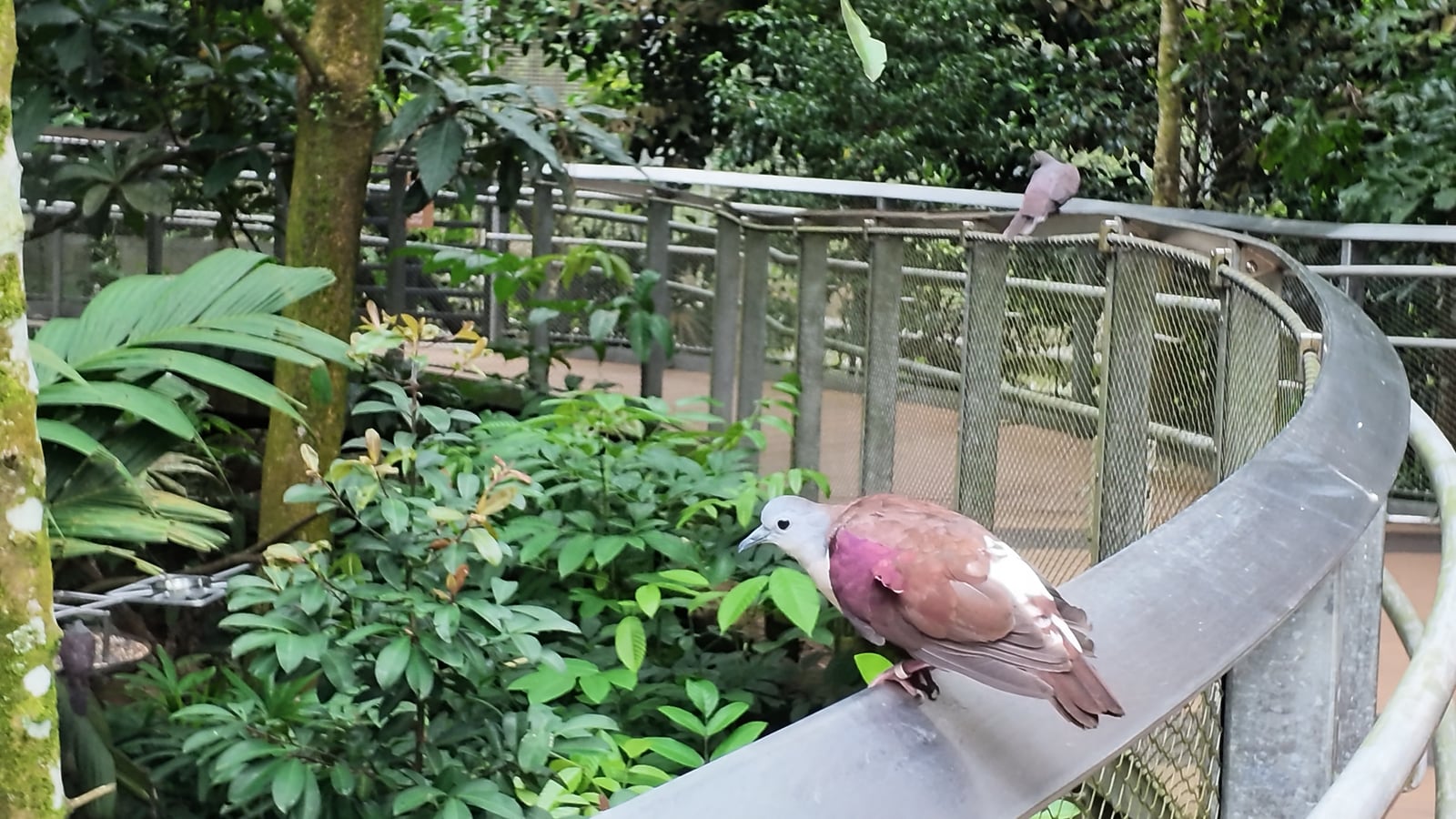
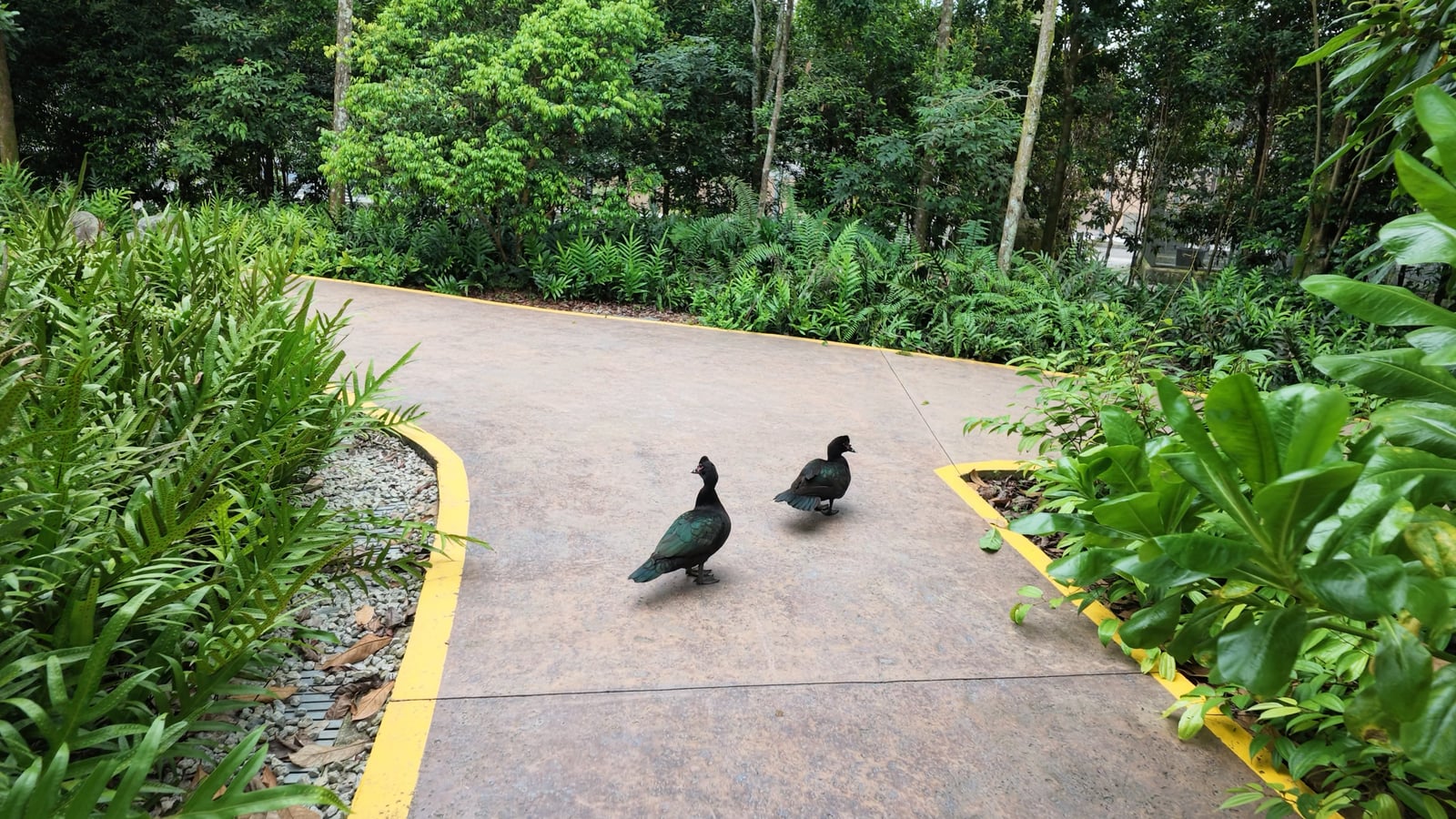
We met birds up close on the railings and on the paths we walked along.
Feeding time was also a chance to see lots of birds together, all up close. Watching them all eat together felt like cheerful chaos. It was such a fun experience.
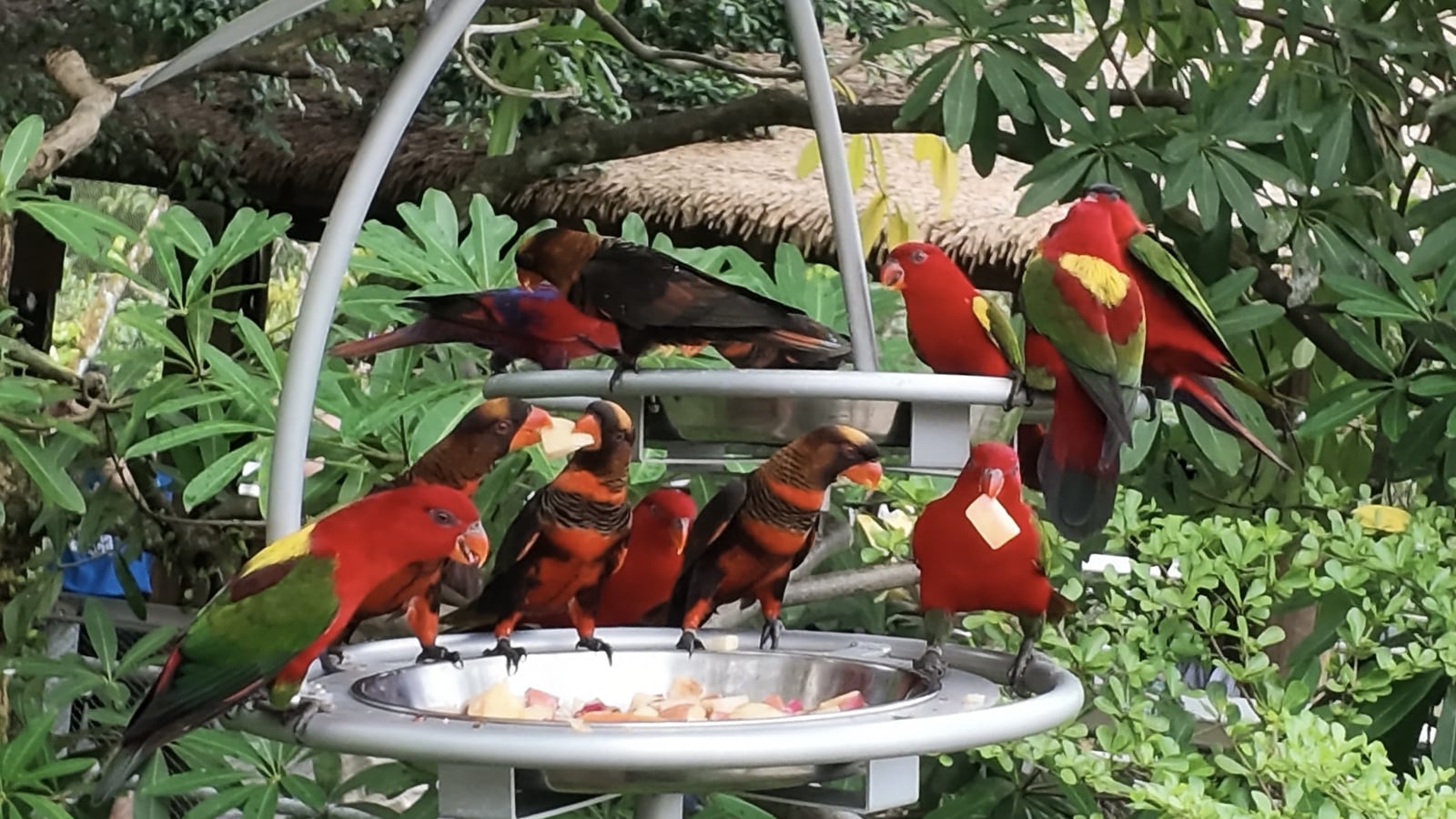
Look at those two holding the same piece of food! This was too cute to keep to myself, so I had to include it. Haha.
Bird Paradise is so big that there were rest areas between each zone. With cool air conditioning and places to sit, they felt like a welcome rain after a drought. Along the way, plenty of little details caught our eye too. One was the seating designed in the shapes and colors of birds’ beaks. Seen together with the wall paintings, the benches became part of giant bird illustrations. Even the places to sit and rest were fun to look at.
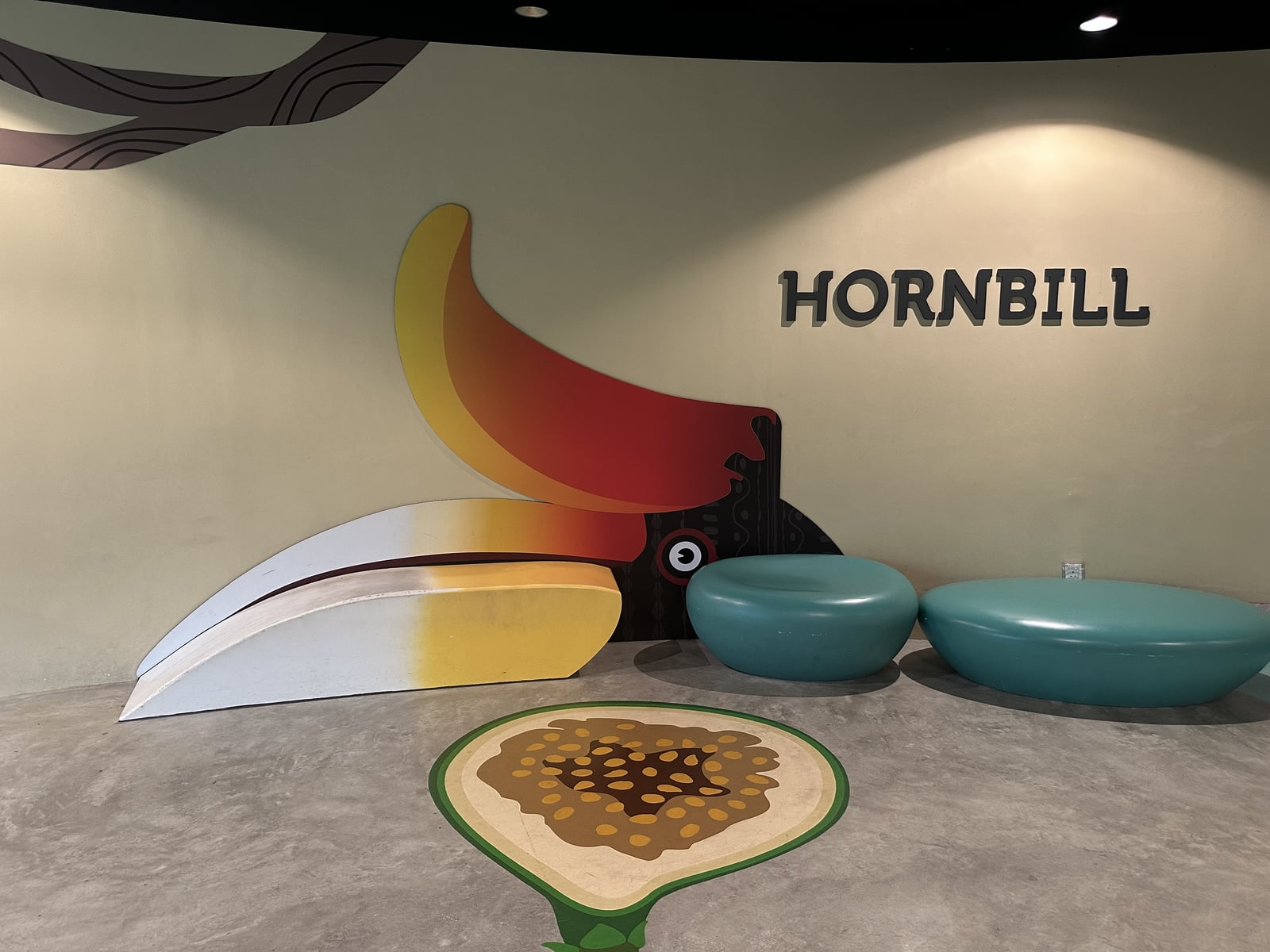
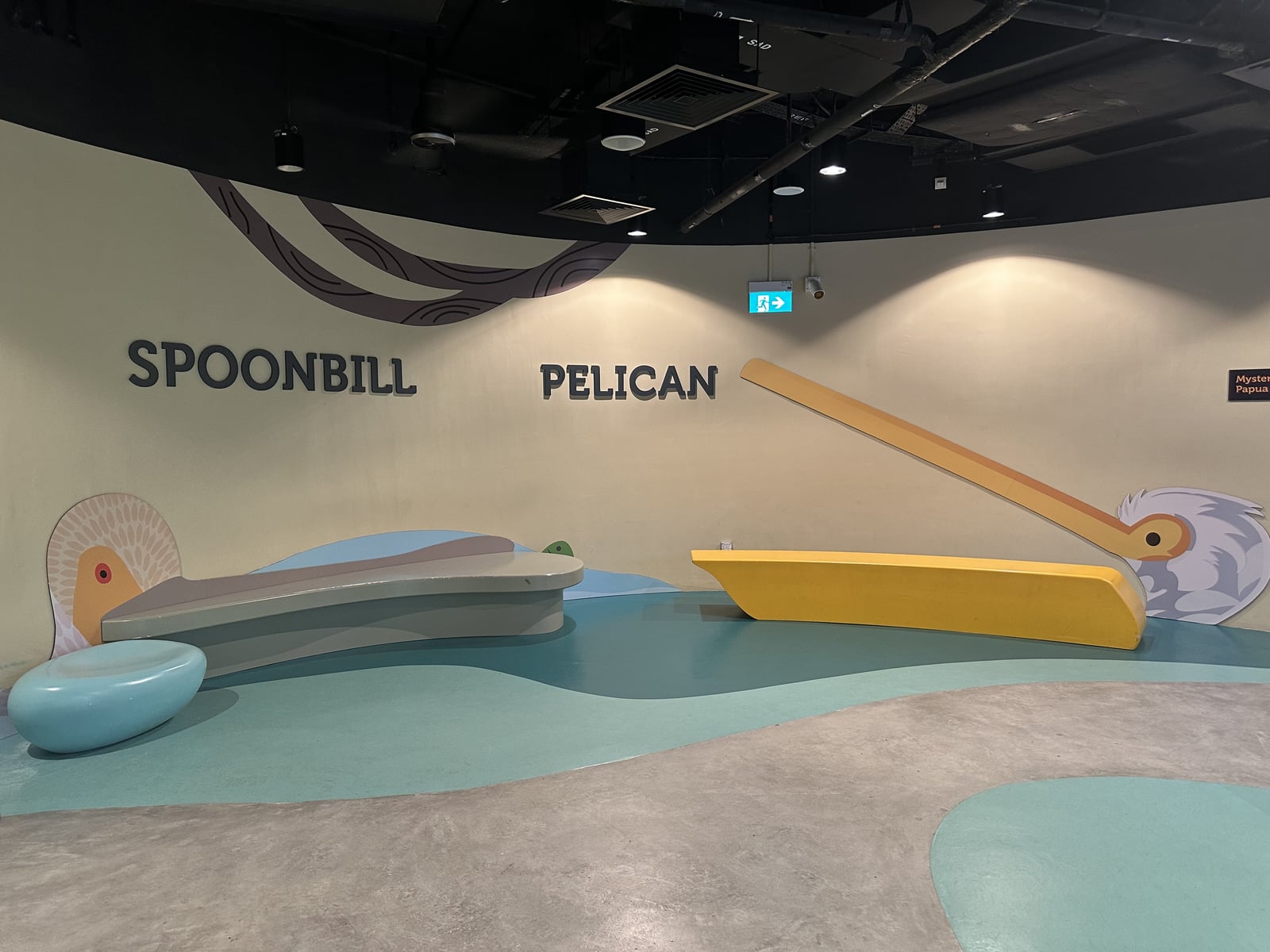
Benches inspired by the shapes and colors of birds’ beaks—especially fun when seen together with the wall paintings.
We also enjoyed some impressive, entertaining shows. We could see birds introduced alongside the presenters up close and watch them spread their enormous wings. It was another way to enjoy the birds alongside looking for them as we walked through the aviaries.
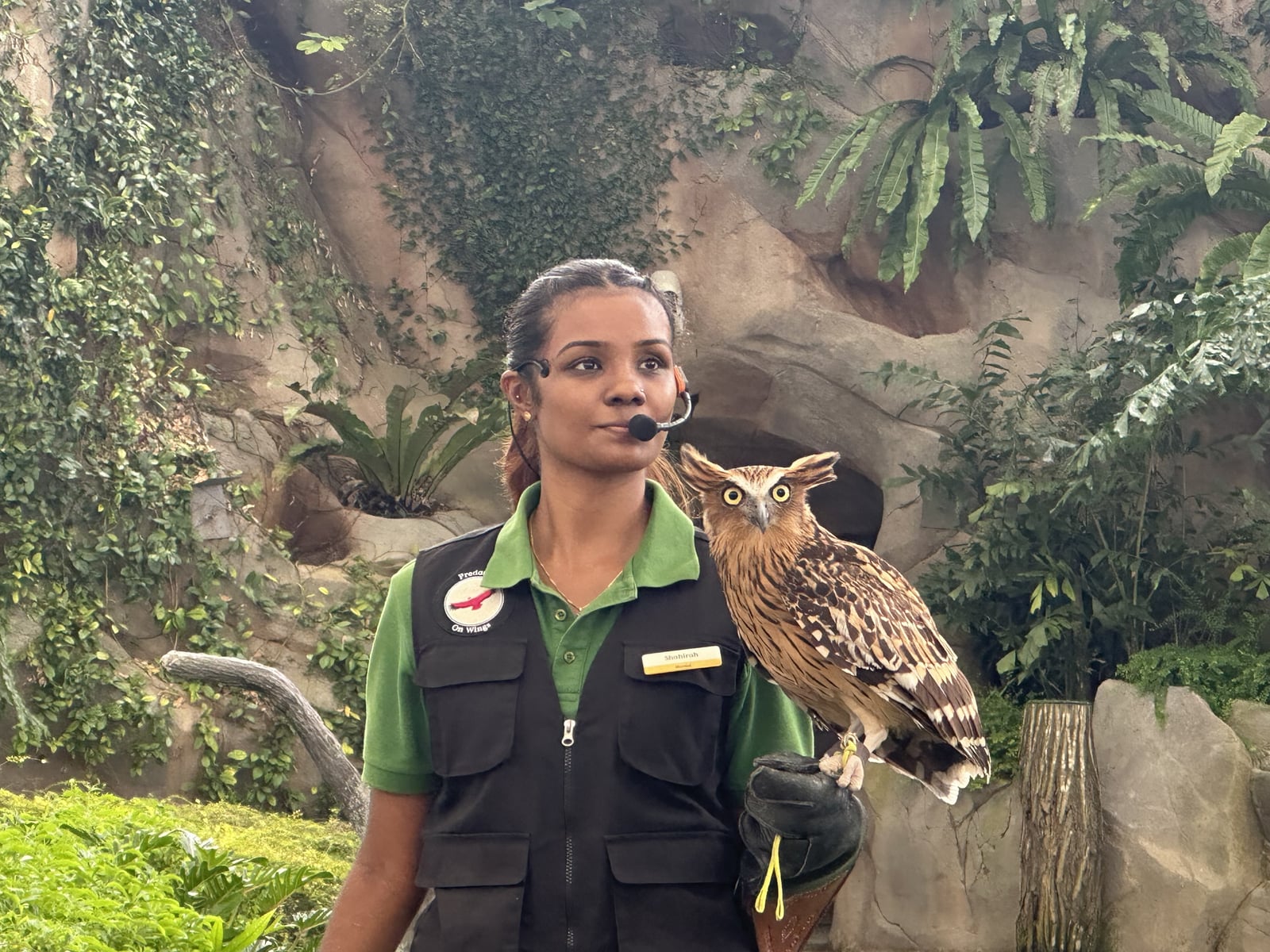
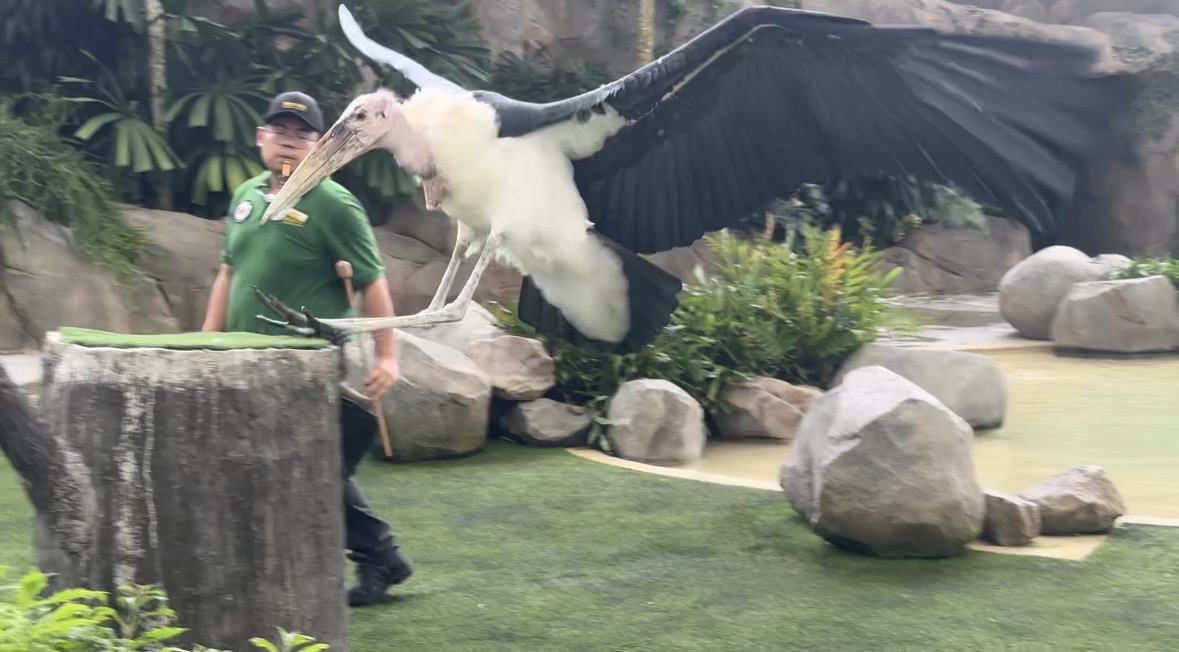
Don’t they look magnificent standing so proud?
I couldn’t finish this Bird Paradise story without mentioning the flamingos. Seeing their pink plumage gathered among the green trees and water, I felt that calling them the park’s flowers was wonderfully fitting.
Watching the flamingos up close was a pleasure, but the wider view of the waterfall, trees, and water had a beauty of its own. The birds’ colors and their surroundings came together so beautifully.
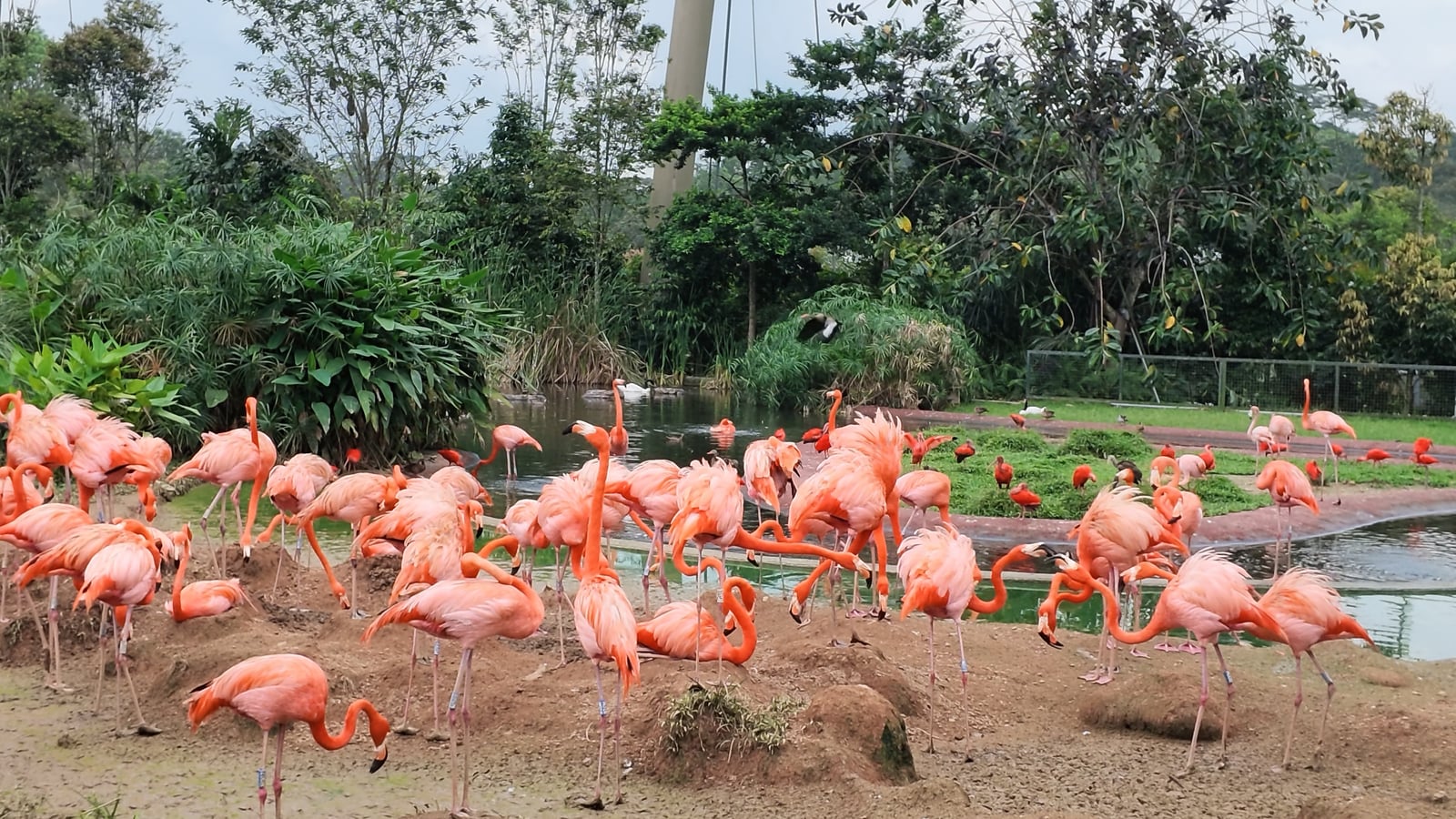
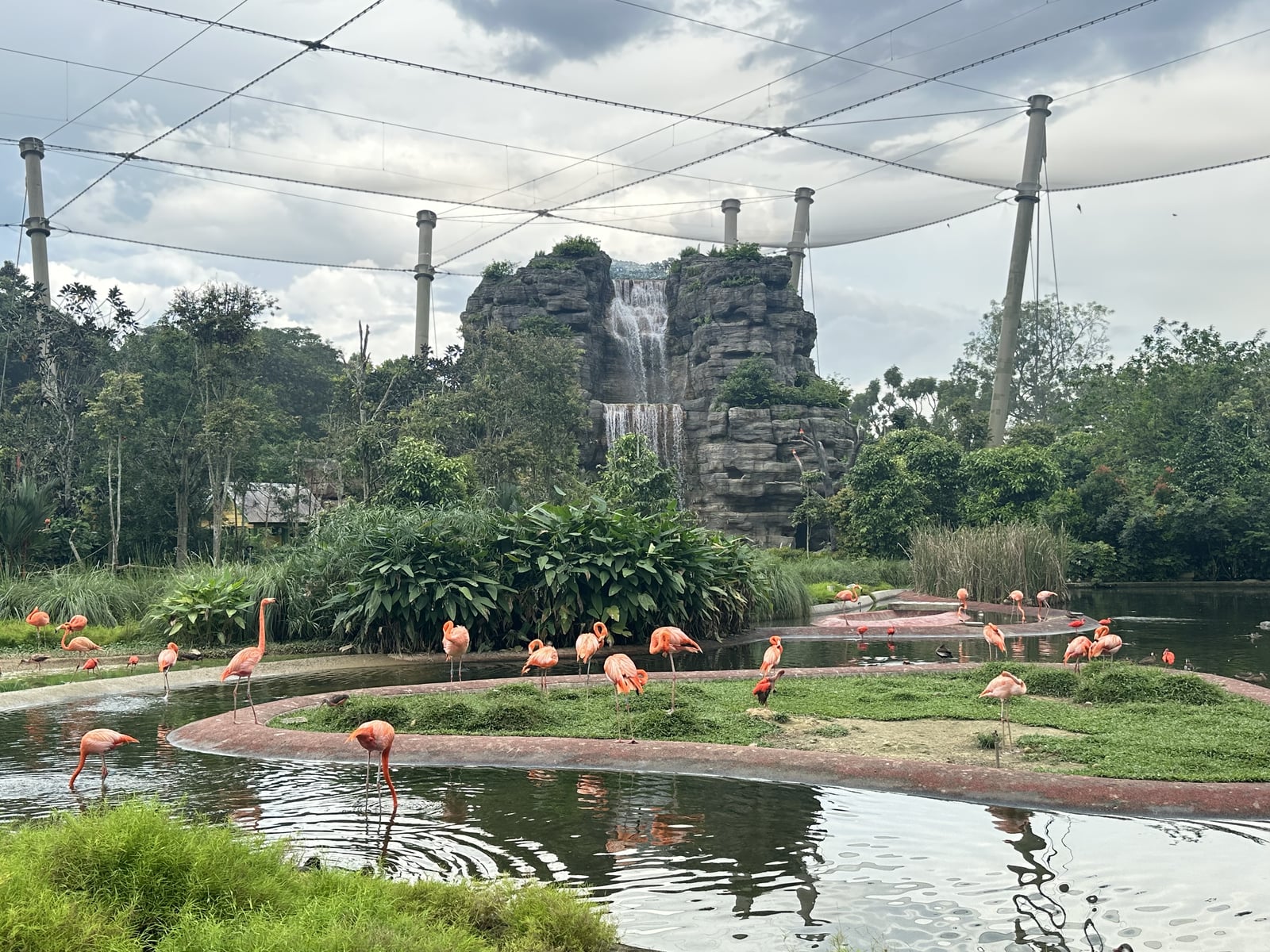
The setting was so beautiful and impressive that it made my eyes widen.
We were also lucky enough to see a spectacular flock in flight. Watching the birds rise together and cross the vast aviary was breathtaking. The backlighting makes it hard to convey the full impact of that moment in the photos, but there were macaws among the birds putting on that wonderful display. Can you imagine how beautiful all those colors looked?
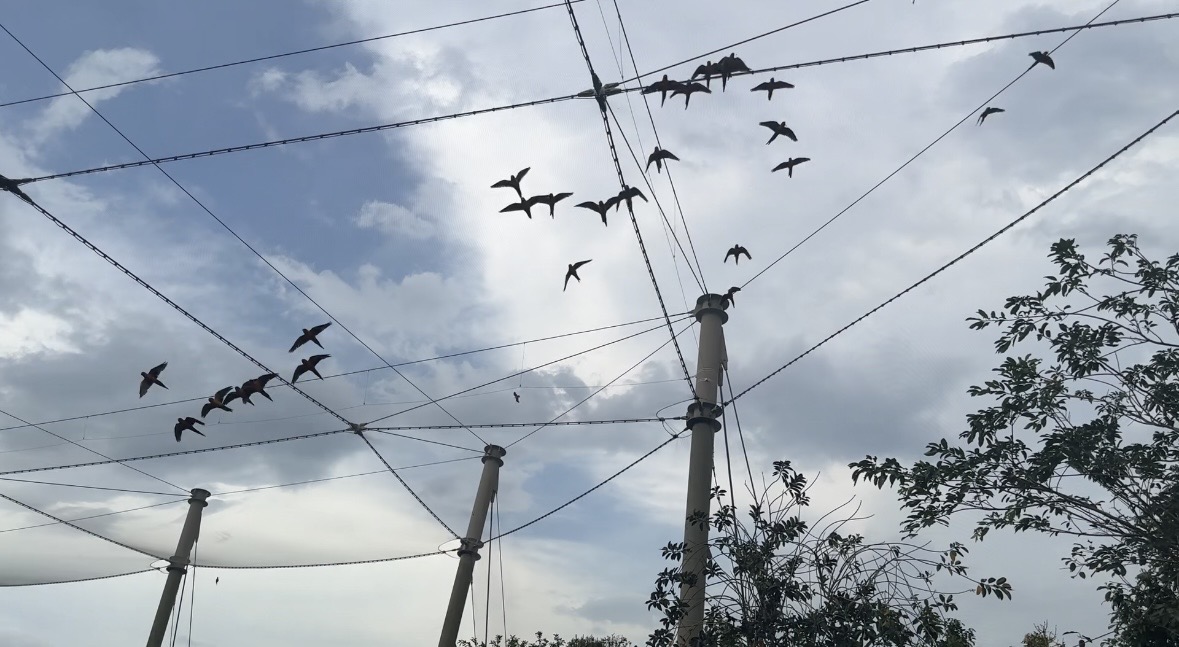
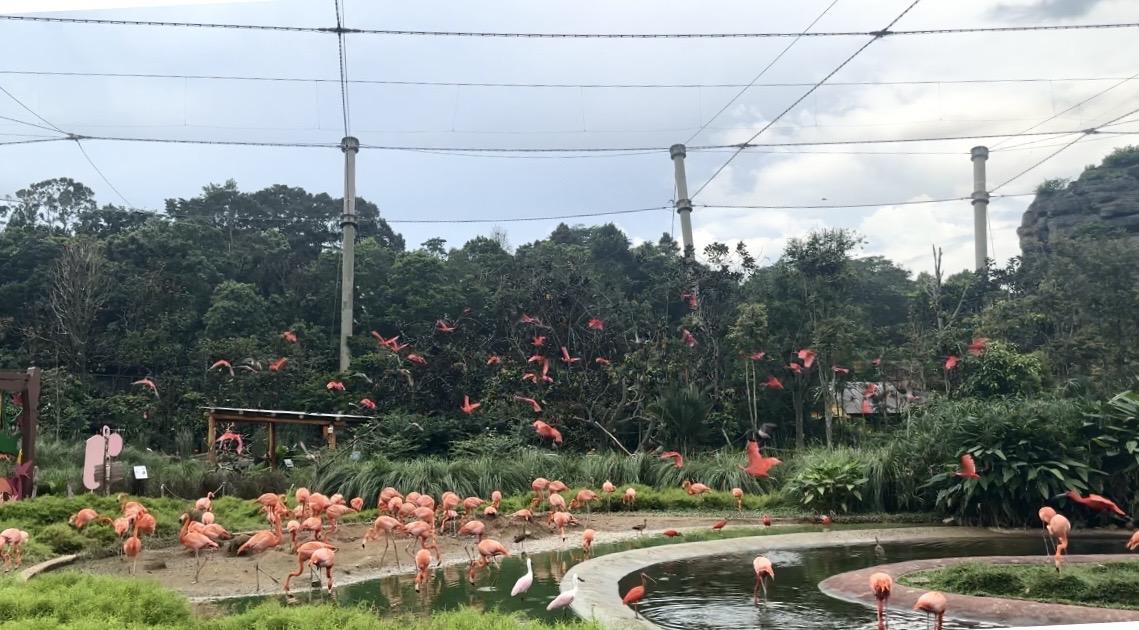
A flock in flight that we were lucky enough to catch. Seeing the birds cross that wide space together was wonderful.
4. Finding the Galahs on a Return Visit
The bird I most wanted to see on this trip to Bird Paradise was the galah (Galah Cockatoo, Eolophus roseicapilla), one of Naviary’s main species. We hadn’t managed to spot one during our rounds, which was disappointing. Just as I thought we might leave without seeing them, we took one more look around near closing time and finally found the galahs. It was such a pleasure to spot those pink birds perched on a high structure.
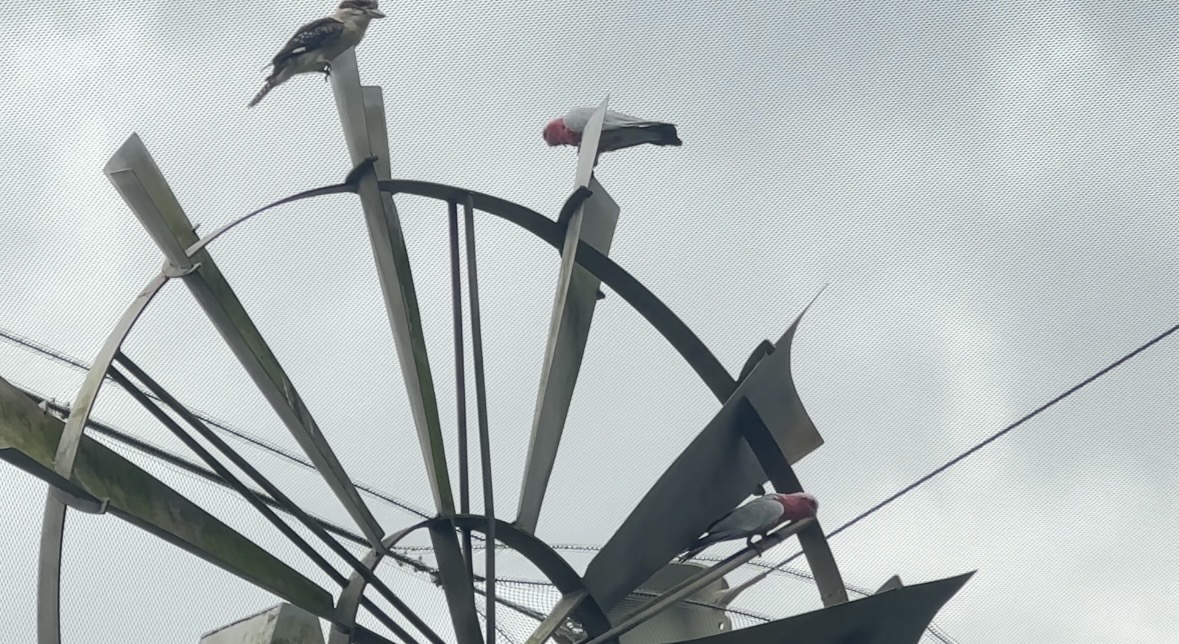
The galahs we were so happy to finally find on one last look around near closing time.
Finding the galahs so late in the day reminded me that one walk through could never show me everything. It was striking to think that even in the same large aviary, the species we could see might differ between morning and afternoon. Perhaps the birds we hadn’t seen had been tucked away somewhere comfortable, emerging when they were ready to move about.
5. A Space for Birds to Live and Breed
The bird I had seen sitting partly hidden among leaves brought that thought into focus. A bird resting in a leafy spot like that could easily go unnoticed as we walked past. I liked the thought of birds being able to stay somewhere they felt secure, then come out when they wanted to be active. Having room to remain out of sight stayed with me just as much as being able to watch them up close.
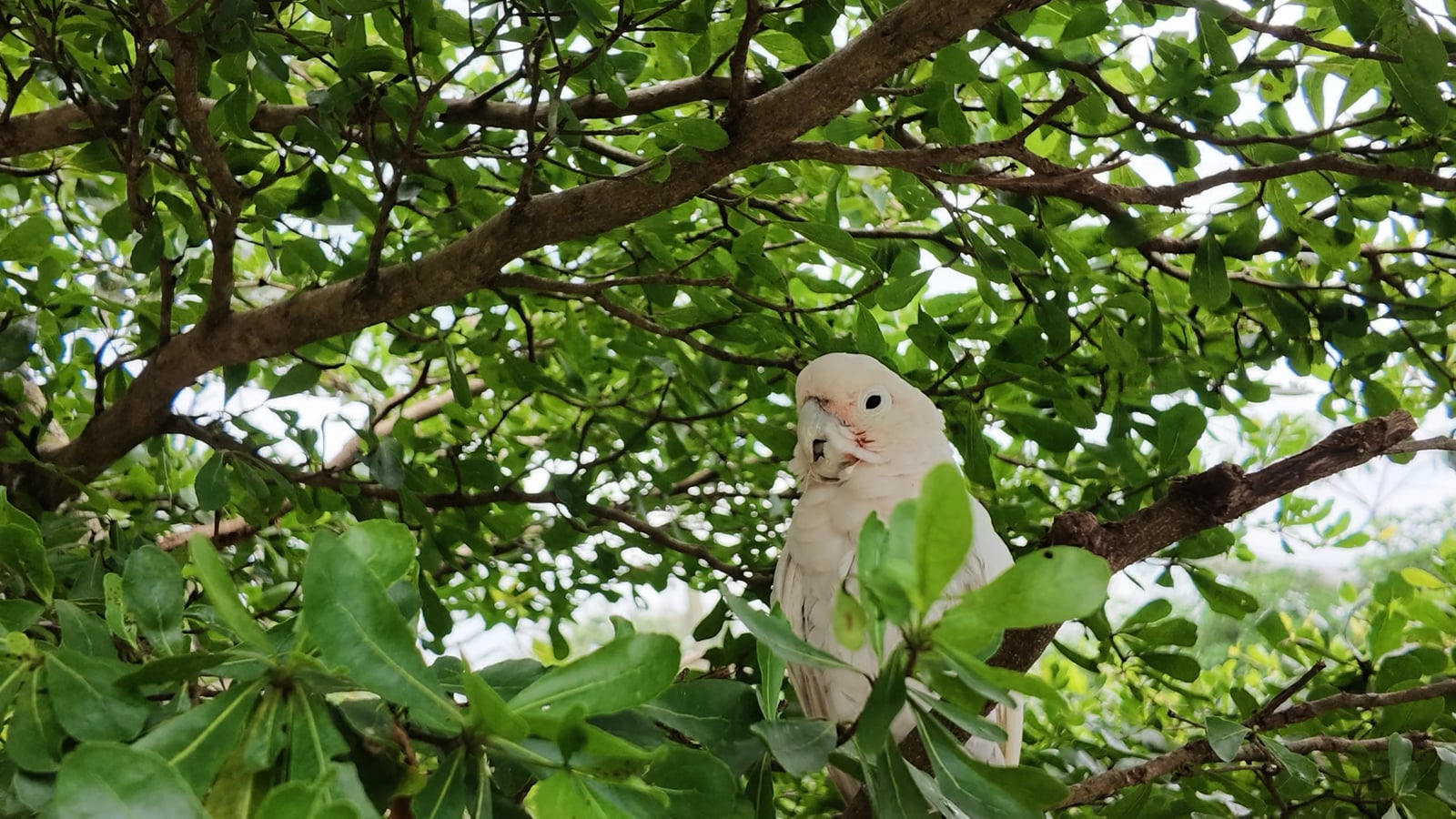
Chances to watch birds hiding high up in the trees don’t come along often. Looking for them is part of the fun, too.
Looking for birds tucked away among the leaves, we could also spot birds carefully sitting on their eggs. It was such a heartwarming sight. Birds feeling the rain when it fell and the wind when it blew, slipping into the leaves when they wanted cover. The magnificent landscape that had amazed me that morning was where their everyday lives unfolded.
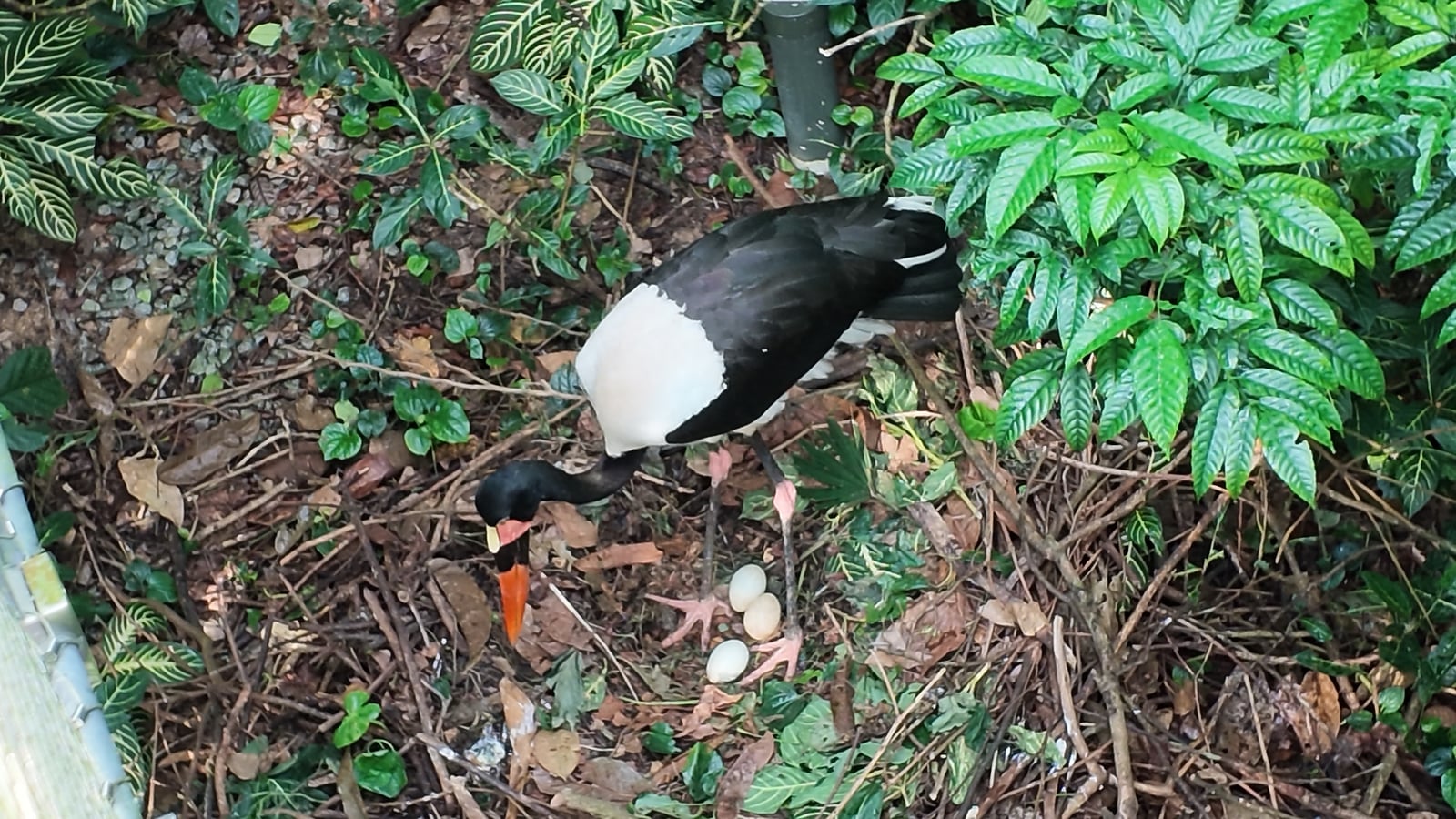
What a wonderful place, where you can even see a bird preparing to become a mother amid nature.
Seeing these moments brought me back to what I consider the heart of breeding. Birds breeding naturally and raising a family when they are ready, in a place they choose and feel safe in. To me, that is the heart of breeding.
It means providing places to retreat and time of their own, with the environment and care that allow everyday life to grow into new life. At Naviary, I want to pay close attention to the birds’ choices and daily lives, and create a space where they can raise families in that way.
Wrapping Up
At first, I was amazed by the scale of the aviaries. As I walked through them, I began to notice the birds’ lives and the care around them. I went hoping to learn, spent a day enjoying something I love, and came home with moments I’ll keep thinking about.
Bird Paradise is a zoo, and Naviary is a breeding center, with a different scale and purpose. Even where we can’t adopt the facilities themselves, the care put into every detail of how birds, nature, and people share a space is something I want to learn from. As we prepare our own center, I hope to keep observing closely and asking questions.
In the next post, I'll share more from Singapore Zoo, Night Safari, and River Wonders, including the animals I encountered and the moments that caught my interest.
If you have questions about Naviary's bird care environment or parrots, feel free to get in touch.