 Parrot Blog
A Guide for Prospective Parrot Owners, Part 1: The Adoption Process
A detailed guide to safely adopting a healthy parrot, from breeding conditions and disease testing to essential paperwork.
 Naviary
A Guide for Prospective Parrot Owners
Introduction
"I want to adopt a parrot, but where should I begin?"
It is one of the questions we hear most often from prospective parrot owners.
People say that special connections happen in an instant. When it comes to adopting a parrot, though, I think the saying “opportunity favors the prepared” is a better fit.
Parrots are long-lived animals. Being properly prepared gives you the best chance of sharing a long, healthy life together.
Preparing for a parrot is quite different from preparing for a dog or cat. There is more to consider than many people expect, from cage size and diet to household safety.
In this article, we will walk through the adoption process and look at how to recognize a healthy bird and a well-managed environment.
1. Choosing Where to Adopt
There are four main ways to adopt a parrot: through a professional breeder, a parrot shop such as a bird café or aviary, a small-scale home breeder, or a rescue.
No single route is always good or bad. Each has its own advantages and drawbacks. A facility may call itself professional while operating with outdated equipment and little transparency. Meanwhile, a home breeder may raise birds in an excellent environment.
What matters is whether the source is trustworthy, maintains a good environment, and manages its birds transparently.
Professional Breeder
A professional breeder specializes in breeding particular species and manages the parent birds, bloodlines, hatching records, and development of each chick.
Naviary is also a professional breeding program. Our two breeders specialize in Galah cockatoos and chestnut-fronted macaws, respectively.
A responsible breeder should manage information about the species, its background, the health of the parent birds, and the breeding environment—and should allow prospective owners to review that information before making a decision.
Another advantage is that the breeder can continue advising you about the bird’s diet and development after adoption.
However, not everyone who calls themselves a breeder works to the same standard. You should always be able to verify the actual breeding environment and its records.
Parrot Café or Bird Shop
These businesses let you meet several species in one place and often sell essentials such as cages and food as well.
However, the information available may be limited depending on whether the bird was bred on-site or supplied by another breeder or distributor.
If you adopt through a shop, pay close attention to these details, as well as the general condition of the store and its husbandry environment.
Home Breeder
Home breeders keep parent birds at home and place the chicks they produce with new families.
Because they usually raise only a small number of birds, they may be able to follow each chick’s development closely. On the other hand, some may lack experience with infection control, breeding, or weaning, and their recordkeeping and contracts may not be systematic.
Do not assume that a bird is healthier or more accustomed to people simply because it was home-bred. Standards vary from one home breeder to another, so keep that in mind and check everything carefully.
Rescue Adoption
You can also adopt a parrot in need of a new family through a shelter, rescue organization, or previous owner.
An adult bird can still form a strong bond with a new caregiver. In fact, because its personality and habits are already apparent, it may be easier to judge whether the bird is a good match for you.
However, its previous living conditions and complete health history may be difficult to establish. A veterinary examination and a careful adjustment plan are therefore important before and after adoption.
How responsibly the source manages its birds matters more than the particular route through which you adopt.
Wherever you adopt, you should be able to review records of the bird’s environment and health.
2. Making an Inquiry
Once you have shortlisted a few sources, ask about the bird itself instead of asking only about the price.
The following questions can help:
- Can I verify the hatch date and sex?
- Was the bird bred domestically or imported? 2-1. If imported, can I see which country it came from and the relevant documents?
- Can I verify the parent birds?
- What is the bird’s current weaning status, and what does it eat?
- Has it been tested for disease? If not, what is the testing plan?
- Does it have an identification band or another identifier?
- Are there any documents, such as CITES paperwork, that must be transferred to me?
- Can I check the bird’s current condition in person or by video?
- What is the procedure if a post-adoption veterinary examination identifies a problem?
3. Visiting in Person
If possible, inspect the bird’s living environment and current condition in person before adopting.
Access to breeding rooms or areas housing multiple birds may be restricted, however, because visitors can introduce infectious disease.
If visits are allowed, use the opportunity to inspect the environment. If not, ask to see it through a video call or recent recorded footage.
4. Inspecting the Environment
A good husbandry environment does not necessarily mean a large, elaborate facility.
The question is not whether it looks like a showroom. What matters is how effectively contamination and disease risks are managed.
Check the following:
- Are the water and food bowls free from contamination?
- Have old food and droppings been allowed to accumulate excessively?
- Is the living space unreasonably cramped?
- Is poor ventilation causing a persistent foul odor?
- Are sick birds kept separately from healthy birds?
- Are hand-feeding tools for chicks handled hygienically?
- Are body weight and feeding amounts recorded separately for each bird?
- If multiple species are present, are birds of very different species or sizes housed together inappropriately?
- Are clean water and suitable food consistently available?
Feather dust and droppings are continuously produced wherever parrots live, so seeing a small amount of waste on the floor during a visit is normal.
Instead, look at whether food and water bowls are contaminated, droppings have built up to a level that suggests inadequate cleaning, or dirty tools are repeatedly reused.
Facilities with many birds need especially rigorous infectious-disease controls, so it is also worth checking whether they have a dedicated quarantine area.
5. Checking the Bird’s Health
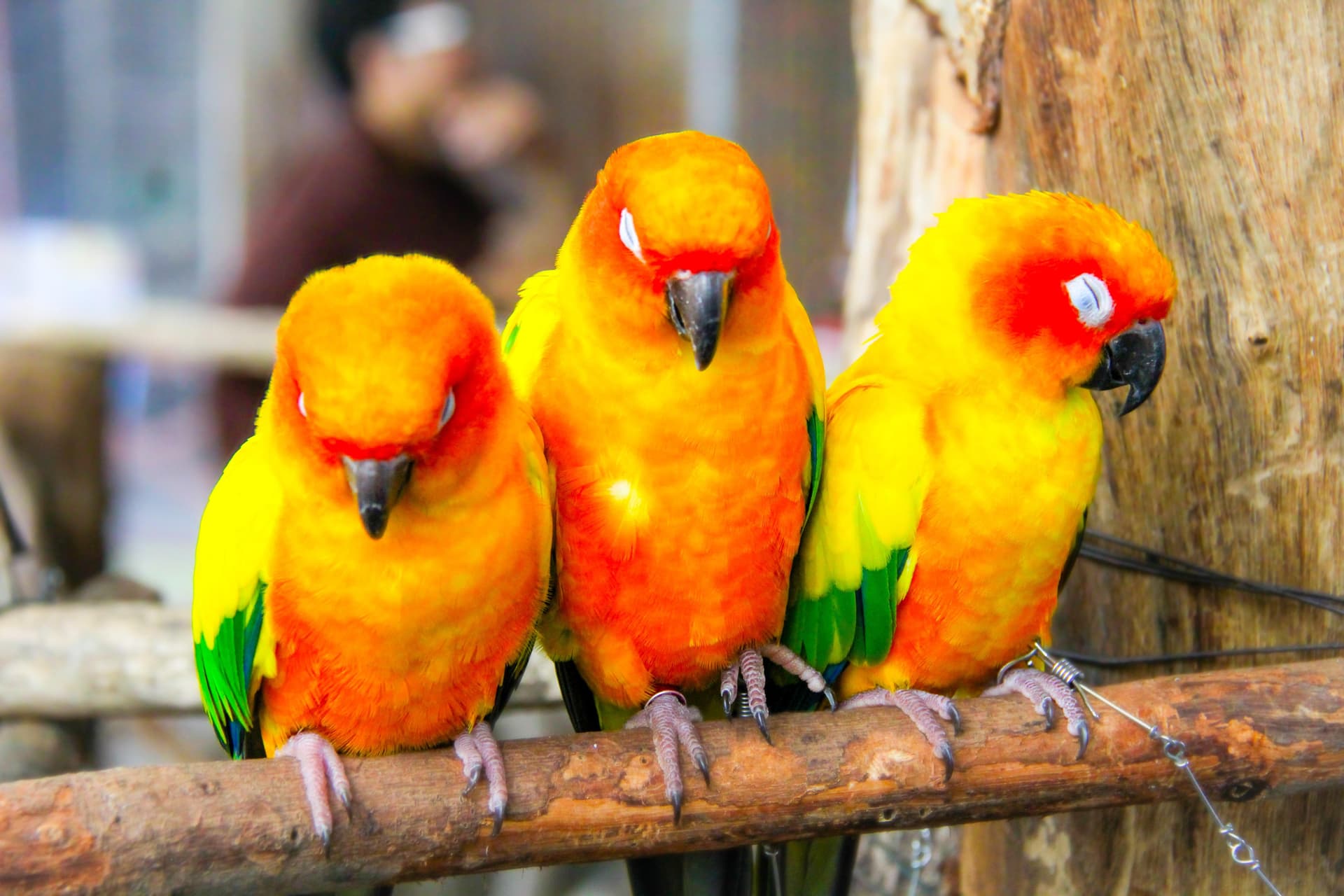
You should also assess whether the bird you hope to adopt appears healthy. Rather than touching it immediately, observe its natural behavior from a short distance.
Look for the following:
- Does it respond appropriately to nearby sounds and movement?
- Can it balance steadily on a perch? Very young chicks may still be developing their balance, so consider their age.
- Does it keep its eyes closed, or show any discharge or swelling? First check whether the bird is simply asleep. Young chicks sleep more and may nap frequently during the day.
- Is there any nasal discharge or soiling around the nostrils?
- While resting, is it breathing rapidly or moving its body excessively with each breath?
- Is it hunched over with its feathers heavily fluffed?
- Are there droppings stuck around the vent (cloaca)?
- Does it approach and actually eat food on its own, or respond eagerly when hand-feeding formula appears?
These signs are useful to check, but a bird may not behave naturally when an unfamiliar person is present or the surroundings feel unfamiliar.
If anything concerns you, consider recording it where permitted and consulting an avian veterinarian.
6. Make Sure the Bird Is Fully Weaned
Weaning is one of the most important things to verify when adopting a young parrot.
Some people believe they need to adopt an unweaned chick and hand-feed it to form a bond, or that bonding is impossible once that stage has passed. In reality, this is rarely true. Depending on how the caregiver interacts with the bird, an unweaned chick may still remain distant, while an adult bird can become very close to a person.
Hand-feeding during weaning can also cause serious problems—including crop burns, crop stasis, and aspiration—when handled by someone without sufficient experience.
Hand-feeding does not guarantee a bond with the caregiver either.
If you do not have professional weaning experience, it is safer to adopt a bird that eats independently and can maintain a stable body weight.
Since December 2025, businesses licensed to sell wild animals in South Korea have been prohibited from selling unweaned birds under the Enforcement Rule of the Wildlife Protection and Management Act. This is another factor to consider.
7. Disease Testing
It is a good idea to review test results for the four diseases commonly mentioned in parrot adoption listings: PBFD, PDD, psittacosis, and APV.
If the bird has already been tested, ask to see the actual laboratory report. If it has not, request testing or confirm in advance what will happen if the bird tests positive after adoption.
False-negative and false-positive results are possible, of course. Even so, reviewing test results is valuable because it helps you prepare for potential disease after adoption.
8. Paperwork
The documents you need will vary depending on the species and the bird’s origin.
Paperwork is especially important for species listed under CITES Appendix I or II. See our article, How to Avoid Parrot Adoption Scams: From Checking CITES Documents to Health Exams, for more information.
Even a non-CITES species may still need to be registered as a designated managed wild animal in South Korea.
9. Checking the Deposit and Contract Terms
It is best not to send a deposit before checking the bird’s health status and paperwork.
If a deposit is required, confirm the following:
- The exact identity of the bird being reserved
- The total adoption fee and deposit amount
- Cancellation and refund terms
- The estimated handover date
- The procedure if handover is delayed by weaning or a health issue
- The procedure if pre-handover disease testing identifies a problem
- The procedure if post-handover disease testing identifies a problem
What a Good Contract Should Include
- Information identifying the breeder or seller and the adopter
- The bird’s species, sex, hatch date, and identification number (sex may only be confirmed later, so make sure it is checked when possible)
- Whether the bird was domestically bred or imported
- The adoption fee and payment method
- Any diseases and treatment history disclosed before adoption
- A list of test results and origin documents being transferred
- The time allowed for a post-adoption veterinary examination
- The procedure if an infectious or pre-existing condition is identified
- Terms for return, refund, or contribution to treatment costs
- The scope of post-adoption support
- What to do if the adopter can no longer care for the bird
“We’ll take care of it if anything goes wrong” is not an enforceable promise. Important terms should be written into the contract.
10. Adoption Day
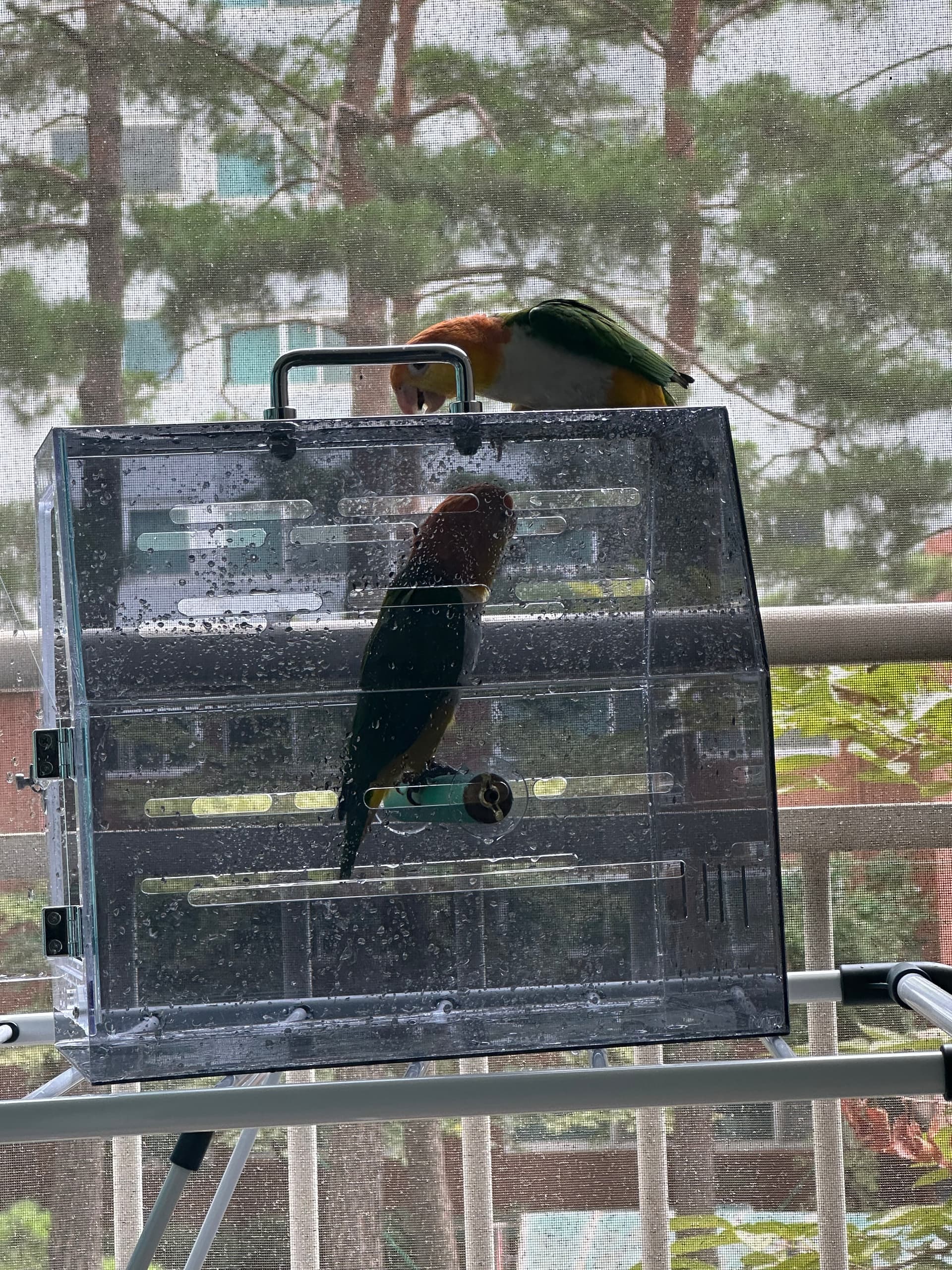
Bring a suitable travel carrier to keep the bird safe and reduce stress on the way home.
There may be a lot to check on adoption day, so stay focused.
A sudden change in food may cause the bird to refuse to eat. Confirm the exact name of its current food and the amount it receives. If possible, bring home enough of that food to last several days.
Before leaving, check all the documents mentioned above—including the contract, disease test reports, and proof-of-origin paperwork—one final time. During the journey, do not remove the parrot from its carrier or allow multiple people to handle it.
If you already have parrots, do not place the new bird in the same cage immediately. Keep it quarantined and introduce it gradually.
It is also a good idea to discuss quarantine and testing with a nearby veterinary clinic that treats birds. To find one, visit AngMorning, a service created by Naviary.
Final Pre-Adoption Checklist
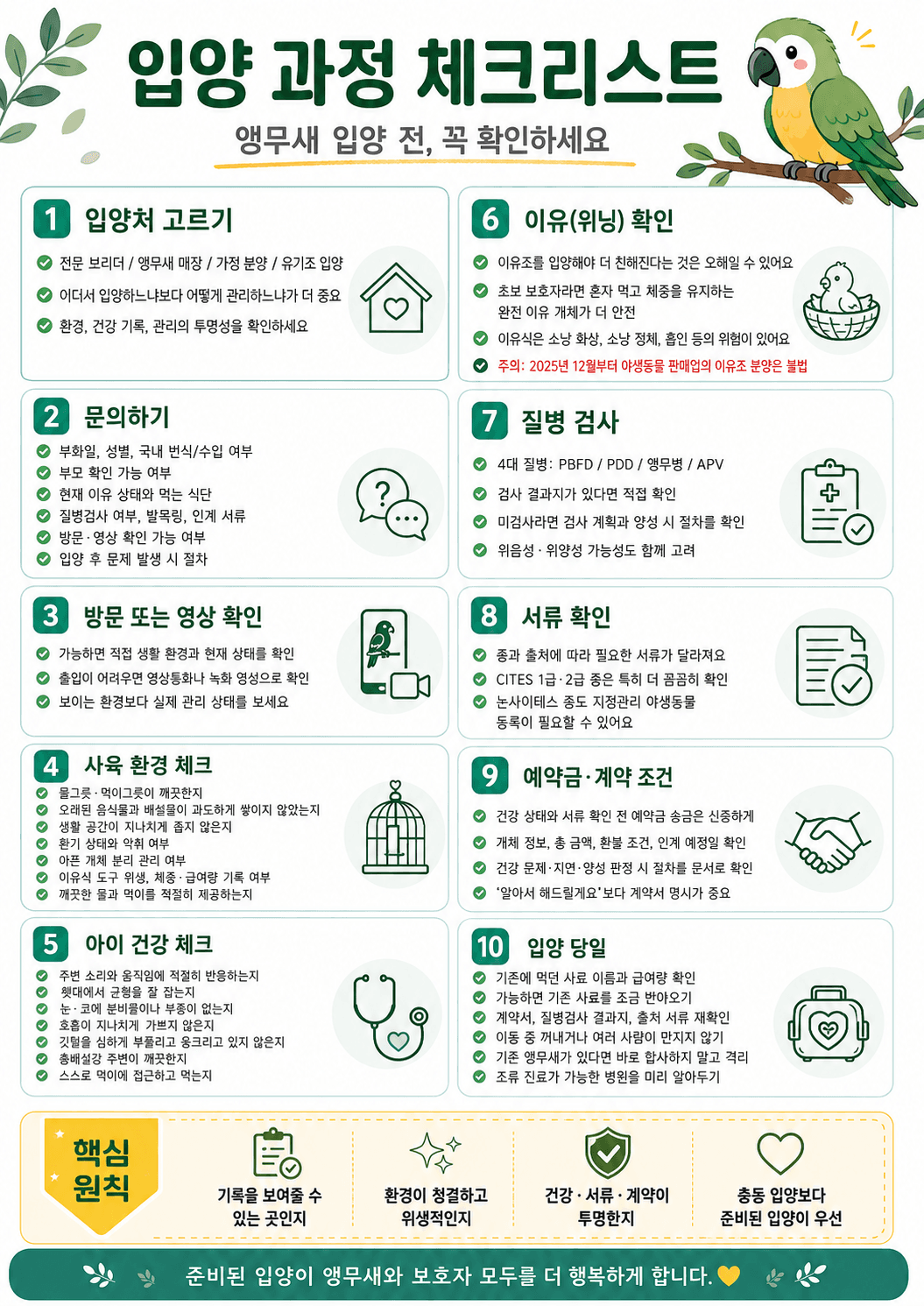
Use this adoption-process infographic to review the checklist at a glance.
Conclusion
We have covered the process of safely adopting a healthy parrot.
At Naviary, we believe that the fundamentals—a transparently documented environment, consistent information, record-based management, and complete paperwork—work together to create a safer, healthier adoption culture.
Before choosing a beautiful bird from a photo and bringing it home, take the time to learn where it was born and how it was raised.
If there is anything you cannot verify, it is okay to postpone the adoption. A lifelong bond is not created by rushing a decision by a few days.
Rather than asking adopters to accept the simple claim that “this bird is healthy,” Naviary records and transparently shares information about the parent birds’ origins, hatching and development, weight, weaning, diet, and health examinations. Our management system was independently developed and is operated by breeders with software-development backgrounds.
This allows adopters to decide with better information and helps breeders remain accountable for each bird throughout its development.
In the next article, we will look at how to prepare the home before your parrot arrives, including its cage, perches, diet, and overall environment.
If you have more questions while preparing to adopt, please contact Naviary.